KHTS Radio Santa Clarita Radio – Santa Clarita News

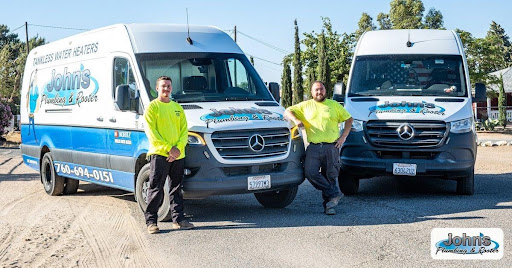
Before you buy a home in Hesperia, check eight plumbing items. Look at the water heater, the main water line, the sewer or septic system, and the water pressure. Then check for hard water, freeze risk, old fixtures, and hidden leaks. Hesperia sits high in the desert, so its homes face cold nights that Santa Clarita homes rarely see.
Many families in the Santa Clarita Valley now look over the hill for more space. Local plumbers such as John’s Plumbing & Rooter see the same questions from new buyers each year. Readers who want to compare local options can look up John’s Plumbing & Rooter in the High Desert on Mojave Street, along with other licensed contractors in the area.
Key Takeaways
- Hesperia winters are colder. Average lows in December sit near 31°F, so pipes can freeze.
- Ask about sewer or septic. Some High Desert homes use a septic tank, not a city sewer line.
- Check the water heater label. Look at its age and make sure it is strapped down.
- Test the water pressure. A simple gauge on an outside tap tells you a lot.
- A plumbing check is not a full inspection. It adds detail, but it does not replace one.
Why Do Hesperia Homes Need a Different Plumbing Check?
Santa Clarita and Hesperia are both in Southern California. But the weather is not the same.
Hesperia sits at about 3,200 feet above sea level. That is much higher than most of the Santa Clarita Valley. Higher ground means colder nights. In December and January, the average low is close to freezing.
Water inside a pipe grows when it freezes. That can split a pipe, much like a can of soda bursts in a freezer. Many SCV buyers have never had to think about this.
The High Desert is also dry and windy. Dust and sun can wear down outdoor pipes faster. So a home that looks fine in July may have trouble in January.
| Factor | Santa Clarita Valley | Hesperia (High Desert) |
|---|---|---|
| Elevation | Mostly lower valley floor | About 3,200 feet |
| Winter nights | Mild most years | Often near or below freezing |
| Main risk for pipes | Age and wear | Freezing plus age and wear |
| Waste system | Mostly city sewer | Sewer in many areas, septic in some |
Check 1: How Old Is the Water Heater?
The water heater is often the first thing to fail in a resale home. Find the label on the tank. Its serial number often shows the year it was built.
A tank that is more than about 10 years old needs a closer look.
California also has a rule for sellers. Under state law (Health and Safety Code section 19211), a water heater must be braced or strapped. This keeps it from falling over in an earthquake. The seller has to confirm this in writing when the home is sold. Plumbers such as the John’s Plumbing & Rooter team often check straps, vents and valves during a pre-sale visit.
Here is what to look for:
- Two metal straps around the tank, one high and one low
- A drain line from the safety valve that points down to the floor or outside
- No rust, drips or damp spots around the base
- A clear space around a gas unit, with nothing stacked against it
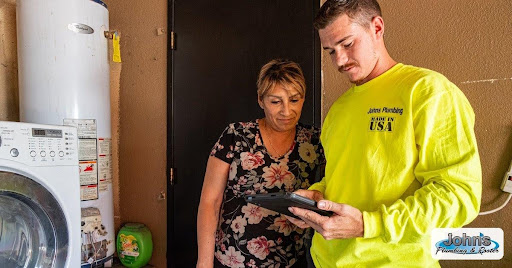
A John’s Plumbing and Rooter plumber reviews water heater results with a Hesperia homeownerCheck 2: What Is the Water Pressure?
Water pressure is how hard water pushes through your pipes. Too low, and showers feel weak. Too high, and pipes, hoses and valves wear out faster.
You can test it yourself. A simple pressure gauge screws onto an outside hose tap. Turn the tap on and read the dial.
- Below about 40 psi (pounds per square inch) may feel weak.
- About 40 to 80 psi is a normal range for most homes.
- Above about 80 psi is high and can strain the whole system.
If the reading is high, ask if the home has a pressure regulator. That is a small valve near where the main line enters the house. It keeps the pressure steady. Many older homes have one that is worn out or missing.
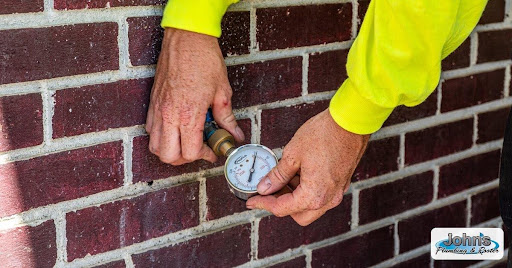
Water pressure gauge test on an outdoor tap at a Hesperia home
Check 3: Is the Home on Sewer or Septic?
This is a big one for buyers from the Santa Clarita Valley. Most SCV homes connect to a city sewer line. In Hesperia, many homes do too. But some homes, often on larger lots, use a septic tank.
A septic tank is a buried tank in the yard. Waste goes into it, and the liquid soaks slowly into the ground. It needs to be pumped out every few years.
Ask the seller which system the home has. Then ask for records. These questions help:
- When was the septic tank last pumped?
- Has the drain field had any problems?
- If it is on sewer, has the sewer line ever been scoped with a camera?
A camera check of the sewer line is common before a sale. A plumber feeds a small camera down the pipe. It can show tree roots, cracks or sagging pipe. Local crews, like the John’s Plumbing & Rooter crew, use this kind of camera on older High Desert lines.
Check 4: Can the Pipes Handle a Hard Freeze?
Cold nights are the main new risk for SCV movers. So look at every pipe that sits outside or in a cold space.
Walk around the house. Look at hose taps, pipes along outside walls, and lines in the garage or attic. Bare pipes in cold spots are the ones that split.
Good signs include:
- Foam sleeves on exposed pipes
- Frost-free hose taps (they have a long body that reaches inside the warm wall)
- A backflow device that is wrapped or covered for winter
- A main shutoff valve that is easy to find and turns by hand
Ask the seller if pipes have ever frozen. Look for patched spots on drywall near plumbing. Those patches can be a clue of an old break.
Check 5: Is There a Hidden Leak?
Small leaks are easy to miss on a quick tour. Yet they add up fast.
The U.S. Environmental Protection Agency (EPA) shares these figures through its WaterSense program:
| Fact from EPA WaterSense | Figure |
|---|---|
| Water lost to leaks in an average home each year | More than 9,300 gallons |
| Water lost to household leaks across the U.S. each year | Nearly 1 trillion gallons |
| Share of homes with leaks wasting 50 gallons or more a day | About 9 percent |
You can do a simple leak test on your own. Ask the seller to make sure no water is running. Then look at the water meter. If the meter still moves, water is leaking somewhere.
Also check under each sink with a flashlight. Look for stains, warped wood or a musty smell. Put a few drops of food coloring in the toilet tank. If color shows up in the bowl without a flush, the flapper leaks.
Check 6: Are the Fixtures Up to California Rules?
California has a rule about water-saving fixtures. It covers homes built on or before January 1, 1994.
Under state law (Civil Code section 1102.155), the seller must tell the buyer if the home has plumbing fixtures that do not meet water-saving standards. This includes toilets, showerheads and faucets.
Older fixtures are not a deal breaker. But they tell you what you may want to replace. Newer fixtures use less water each day.
Look at these items during your visit:
- Toilets: check for a date stamp inside the tank lid
- Showerheads: look for a flow rating printed on the face
- Faucets: check for drips, loose handles or crusty buildup
- Shutoff valves under sinks: turn them gently to see if they still work
A valve that will not turn is a common find in older homes. It matters most in an emergency, when you need to shut off water fast.
Check 7: What Does Hard Water Do to Pipes?
Hard water has a lot of minerals in it, mostly calcium and magnesium. Many High Desert towns have hard water.
Hard water is not a safety issue. But it can be hard on a home. Over time, minerals build up inside pipes, faucets and the water heater. Think of it like plaque on teeth. It builds slowly, then causes trouble.
Signs of hard water include:
- White crust on faucets and showerheads
- Spots on glasses after the dishwasher
- Soap that does not lather well
- A water heater that pops or rumbles
Ask if the home has a water softener or filter. If it does, ask when it was last serviced. The city’s yearly water quality report also lists mineral levels. Hesperia posts this report for each year.
Check 8: Has the Main Water Line Been Replaced?
The main water line runs from the street meter to the house. It is buried, so it is easy to forget.
Older homes may have galvanized steel pipe. This kind of pipe rusts on the inside over many years. The rust narrows the pipe, like a straw that slowly clogs. Water pressure drops, and the water may look brown at first.
Newer homes often use copper or plastic pipe, such as PEX. These hold up better.
Look where pipes come out of walls under sinks. You may see what kind of pipe the house has. Gray metal with threads often means galvanized. Shiny orange means copper. Red, blue or white flexible tube often means PEX.
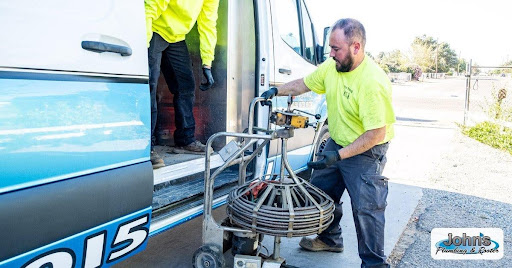
A plumber unloads a drain and sewer machine from a service van in Hesperia
What Can a Plumbing Check Not Tell You?
A plumbing check is useful. But it has limits, and buyers should know them.
It does not replace a full home inspection. A general inspector looks at the roof, wiring, structure and more. A plumber focuses on pipes and water.
A plumber also cannot see inside every wall. Most pipes are hidden behind drywall or under slabs. A camera can reach some lines, but not all of them.
Here are other limits to keep in mind:
- It cannot promise a pipe will not fail next month.
- It cannot show how the home handles a hard freeze in summer.
- It cannot replace seller disclosures or permit records.
The best approach is to use all three together: the seller’s disclosures, a full home inspection, and a plumbing check where needed.
A Simple Timeline for SCV Buyers
Timing matters in a home sale. Most checks happen during the inspection period. That window is often short, so plan ahead.
| When | What to do |
|---|---|
| Before you make an offer | Ask about sewer or septic, water heater age and past freeze damage |
| First days of escrow | Book the home inspection and any plumbing or sewer camera check |
| During the inspection period | Read the seller’s disclosures and ask follow-up questions |
| Before closing | Confirm any repairs the seller agreed to make |
| First winter in the home | Wrap outdoor pipes and learn where the main shutoff valve is |
Write your questions down before each visit. It is easy to forget them once you walk inside.
Frequently Asked Questions
Do Hesperia pipes really freeze?
Yes, they can. Hesperia sits around 3,200 feet up, and average lows in December and January are near freezing. Bare pipes outside or in a cold garage face the most risk.
Is a septic tank a problem when buying a home?
Not by itself. Many homes run well on septic for years. The key is to ask when it was last pumped and if there have been any problems.
Does a home inspection cover the sewer line?
Usually not in full. A general inspector checks the plumbing they can see. A camera check of the sewer line is a separate service that a plumber often does.
What does California require for water heaters in a home sale?
State law says water heaters must be braced or strapped against earthquakes. The seller confirms this in writing when the home is sold.
Learning a New Home in a New Climate
Moving from the Santa Clarita Valley to Hesperia brings more space and a new way of living. It also brings colder nights, dry winds and, sometimes, a septic tank in the yard.
None of this should scare a buyer away. It just calls for a few new questions. Look at the water heater. Test the pressure. Ask about sewer or septic. Check the pipes for winter.
A home’s plumbing tells a story about how it was cared for. Taking an hour to read that story can make the first winter in the High Desert a calm one.
About John’s Plumbing & Rooter
John’s Plumbing & Rooter is a plumbing company in Hesperia, California. It has served homes and businesses across the High Desert for 26 years. The team handles drain cleaning, water heaters, sewer lines, gas lines, leak repairs and fixture installs. Service is offered in English and Spanish.
- Business name: John’s Plumbing & Rooter
- Address: 13771 Mojave St, Hesperia, CA 92345
- Phone: (760) 694-0151
- Website: johnsplumbing760.com
- Email: [email protected]
- Hours: Monday to Friday 7 AM to 7 PM, Saturday 7 AM to 3 PM, closed Sunday
- Owner: John Stepanian, Master Plumber and Owner
- License: California CSLB License #1041749
- Google Business Profile: share.google/Xwn4wBzfsEJgwLQFm
- Service areas: Hesperia, Victorville, Apple Valley, Adelanto, Oak Hills, Phelan, Pinon Hills, Lucerne Valley, Helendale, Barstow, Big Bear, Crestline, Lake Arrowhead and Wrightwood