KHTS Radio Santa Clarita Radio – Santa Clarita News

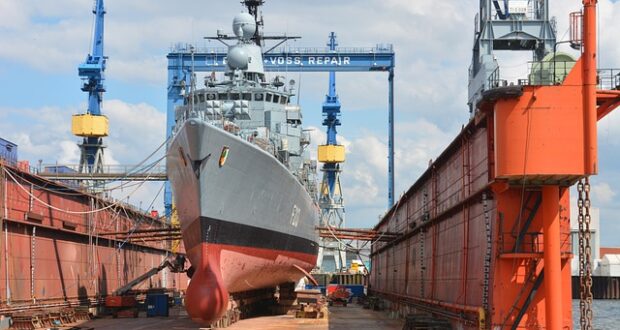
Whether it was for exploration, trade, or war, ships have been an important part of human history since the beginning. From small boats made from reeds to massive ocean-going vessels, shipbuilding has evolved over time to meet the needs of people around the world. In this blog post, we’ll explore the history of shipbuilding and how ships have changed over the centuries.
Ancient ships
The history of shipbuilding is long and varied, stretching back to ancient times. Some of the earliest known ships were the paddled canoes used by the indigenous peoples of the Americas. These simple vessels were propelled through the water using a paddle or pole, and were often used for fishing or transportation. Around the same time, the first sailing ships began to appear in different parts of the world. These early sailing vessels were powered by the wind, and allowed for longer voyages and more exploration. Over time, shipbuilders began to experiment with different designs and materials, resulting in a wide variety of ships that have been used for everything from war to trade.
The Age of Exploration
The history of shipbuilding is a long and fascinating one, spanning thousands of years and encompassing a wide range of cultures. Perhaps the most crucial period in the development of this art was the Age of Exploration, when brave sailors set out to chart new and unknown waters. Many of the world’s most iconic ships were built during this period, including the Santa Maria, the HMS Beagle, and the Titanic. The technology used to build these vessels was constantly evolving, and each new generation of ships was larger and more complex than its predecessor. The Age of Exploration was a time of great danger and adventure, and shipbuilding played a vital role in shaping the course of history.
Naval warfare during the Age of Sail
For centuries, naval warfare has played a major role in the history of shipbuilding. During the Age of Sail, for example, sailing ships were the backbone of many navies around the world. These ships were designed for long voyages and could carry large crews and cargo. They were also carrying a lot of firepower, with cannons mounted on the decks and in the hulls. In battle, sailing ships would try to outmaneuver each other and get into position to fire their guns. The resulting battles could be very brutal, with ships being badly damaged and even sunk. Today, naval warfare still plays a significant role in shipbuilding, with many navies investing in new technologies to build faster, more maneuverable ships. However, the age of sail is now just a part of naval history.
Steamboats and the Industrial Revolution
It was during the Industrial Revolution that shipbuilding truly came into its own. The advent of steam power transformed maritime transportation, and led to the construction of ever-larger and more complex vessels. Today, the world’s largest cruise ships can accommodate thousands of passengers and crew, and feature amenities that would have been unthinkable a few centuries ago.
The 20th century and beyond
The 20th century saw some of the most important innovations in shipbuilding in history. The introduction of steel hulls and steam engines heralded a new era of maritime travel, and the rise of global trade led to a demand for ever-larger vessels. In the early years of the century, ships were still largely built by hand, but the introduction of new construction techniques and the use of prefabricated components quickly transformed the industry. By the end of the century, shipyards were able to build huge ocean-going vessels in a matter of weeks.
Shipbuilding today
The principles of shipbuilding have remained largely unchanged since ancient times. Modern shipyards still use many of the same techniques that were employed by their predecessors, ensuring that the tradition of shipbuilding will continue for many years to come. Today, metal fabrication is still an essential part of shipbuilding, and the use of computer-aided design (CAD) and computer-aided manufacturing (CAM) has made the process even more precise. Shipbuilding is a highly-specialized industry that uses cutting-edge technology to create some of the most advanced machines in the world. From ancient times to the present day, shipbuilding has played a vital role in the advancement of human civilization.
The future of shipbuilding
The future of shipbuilding is shrouded in potential but fraught with uncertainty. New technologies could revolutionize the way ships are designed and built, but it is unclear if the maritime industry will embrace these changes. On the one hand, 3D printing could be used to create custom ship components quickly and cheaply. This would allow shipbuilders to experiment with new designs without incurring significant costs. Alternatively, traditional methods could be used to build ships more efficiently, making use of advances in construction techniques and materials. Whichever path the maritime industry chooses, the future of shipbuilding is sure to be fascinating.