 KHTS Radio Santa Clarita Radio – Santa Clarita News

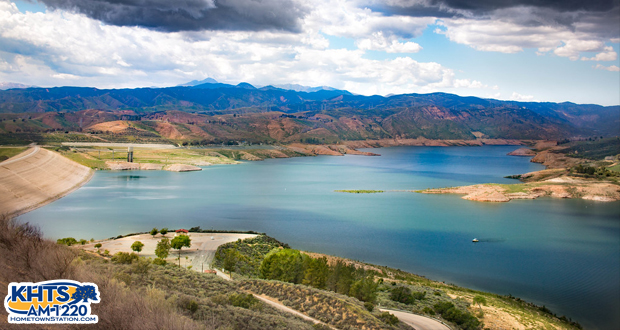
State water resource officials remain “cautiously optimistic” that 2017 could see the further easing of drought conditions statewide, after a winter thus far.
Sponsored Articles
“Overall, we’re cautiously optimistic about having some major easements of the drought,” said Ted Thomas, spokesman for California Department of Water Resources. “But I think cautious optimism because we have seen before when California has started out with a wet winter and things can turn very dry.”
At Castaic Lake, which is a major supplier for the state’s regional water retailers, the current level matched about 78 percent of the historical average, Thomas said.
“And it takes more than one wet year to overcome five years of serious drought,” he added.
For Santa Clarita Valley residents feeling a little drenched from the recent rains will be happy to know the weekend forecast calls for dry weather with temperatures warming up to the 60s.
A precautionary flood watch, for roads and burn areas where mud slides are more of a hazard, was issued until 9 p.m. Thursday night. There might less intense rain for up to 2-3 hours after that, according to Scott Sukup, spokesman for the National Weather Service, and then the wet spell should pass.
The next likely chance of showers is expected in the middle of next week.
The State Water Project diverts water from the Feather River to the Central Valley, South Bay Area and Southern California. Its key feature is the 444-mile long California Aqueduct that can be viewed from Interstate 5, according to the SWP officials.
While Castaic Lake is on its way back to previous levels, Lake Cachuma in Santa Barbara County, another important regional resource, was down to the lows teens as a percent of its historic levels despite the recent rains.
The above examples show how vast the state is and how so many different factors can affect regional supply, Thomas said.
Another encouraging sign for water experts has been the resurgence of the Sierra Nevada snowpack, he added. Representing about 30 percent of the state’s water supply, the snowpack had been lagging during the summer, and even in the fall despite Northern California rain.
A few facts and figures about the State Water Project:
built to deliver about 4.2 million acre-feet of water per year
annual water deliveries to 29 public agency contractors that buy SWP water
averaged 2.8 million acre-feet in deliveries over the last decade, with a high water mark of 3.7 million acre-feet in 2006
main aqueduct is 444 miles in length
the SWP provides supplemental water for 25 million Californians and irrigation water for an estimated 750,000 acres of farmland
The State Water Project (SWP) is responsible for bringing drinking water to 25 million people and provides irrigation for 750,000 acres of farmland. Without it California would never have become the economic powerhouse it is today.
The nation’s largest state-built water and power development and conveyance system, the SWP diverts water from the Feather River to the Central Valley, South Bay Area and Southern California. Its key feature is the 444-mile long California Aqueduct that can be viewed from Interstate 5.
The SWP has required the construction of 21 dams and more than 700 miles canals, pipelines and tunnels. To reach Southern California, the water must be pumped 2,000 feet over the Tehachapi Mountains; it’s the highest water lift in the world.
All contractors pay the same rate per acre-foot for the cost of constructing and operating facilities which store and convey the SWP water supply. In addition, each contractor pays a transportation charge which covers the cost of facilities required to deliver water to its service area. Thus, the contractors more distant from the Delta pay higher transportation charges than those near the Delta.
Full payments are made each year for fixed SWP costs regardless of the variations in water deliveries that occur from year to year. Fixed costs include those for operation, maintenance and debt service. Contractors also pay costs which do vary depending on the amount of water delivered during the year. These include the costs for energy used to pump water to their aqueduct turnout locations.
An acre foot of water equals about 326,000 gallons, or enough water to cover an acre of land 1 foot deep.






California has done little to expand its surface water storage facilities in recent decades. The backbone of the state’s water system, the federal Central Valley Project (CVP) and State Water Project (SWP), have made no significant infrastructure investments since the 1970s. These projects designed their reservoirs to satisfy the water demands of the state’s population when it was only about 19 million, half the size of the current population. California’s fast-growing population is likely to increase water demand. Thus the aging water infrastructure is insufficient to satisfy the demands of California’s 38 million current residents.