KHTS Radio Santa Clarita Radio – Santa Clarita News

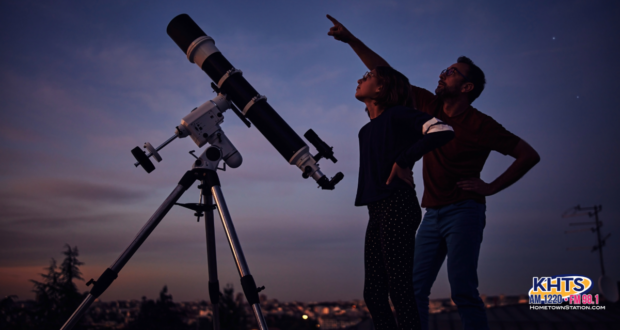
From the middle of August, expect cosmic displays of shooting stars to light up the night sky as the Perseids meteor shower enters our atmosphere.
Starting the night of Sunday, Aug. 11 and before dawn on Aug.12, expect to see the Perseids meteor shower.
The Perseids meteor shower occurs every year in August when Earth ventures through trails of debris left behind by an ancient comet, according to National Aeronautics and Space Administration (NASA) officials.
Each Perseid meteor is a tiny piece of the comet Swift-Tuttle, which orbits the sun every 133 years. Each swing through the inner solar system can leave trillions of small particles in its wake. When Earth crosses paths with Swift-Tuttle’s debris, specks of comet-stuff hit Earth’s atmosphere and disintegrate in flashes of light, according to NASA officials.
Perseid Meteor showers take place in the northeastern sky and can produce up to 100 visible meteors per hour at a destination with few clouds and minimal light pollution, such as a national park.
A Perseid meteor typically travels at a speed of up to 132,000 miles per hour – which is equivalent to 59 kilometers per second. At its highest temperature peak, a meteor could reach anywhere from 3,000 to 10,000 degrees Fahrenheit, according to NASA.
The best method to view the Perseid meteor shower is at an outdoor location such as a park or similar open area between midnight and dawn on the morning of Aug. 12. Allow about 45 minutes for your eyes to adjust to the dark. Lie on your back and look straight up. Increased activity may also be seen on Aug. 12-13, according to NASA officials.
Recommendations on parks to see the Perseid meteor shower are listed below:
- Pinnacles National Park
- Joshua Tree National Park
- Death Valley National Park
- Sierra Nevada mountains
For more information about the Perseid meteor shower, visit the NASA website.
Ed. Note: This article was written by Charles Calvario.
Sponsored Articles
KHTS FM 98.1 and AM 1220 is Santa Clarita’s only local radio station. KHTS mixes in a combination of news, traffic, sports, and features along with your favorite adult contemporary hits. Santa Clarita news and features are delivered throughout the day over our airwaves, on our website and through a variety of social media platforms. Our KHTS national award-winning daily news briefs are now read daily by 34,000+ residents. A vibrant member of the Santa Clarita community, the KHTS broadcast signal reaches all of the Santa Clarita Valley and parts of the high desert communities located in the Antelope Valley. The station streams its talk shows over the web, reaching a potentially worldwide audience. Follow @KHTSRadio on Facebook, Twitter, and Instagram.