 KHTS Radio Santa Clarita Radio – Santa Clarita News

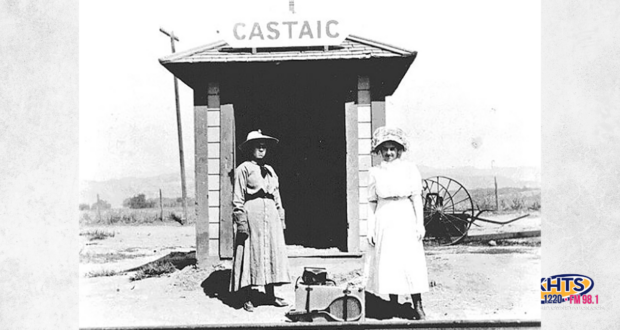
On this day in Santa Clarita history, March 25, 1889, residents of the Castaic area came together to organize the Castaic School District.
When the Southern Pacific Railroad established its depot at Castaic Junction in 1887, the population north of the Santa Clara River was small, with families such as the Lopezs, Cordovas, Jenkinses, and Bellas among the early settlers.
One notable figure in the region was George Washington Lechler, who built an adobe home in Hasley Canyon in 1879 as the headquarters for his ranch. A former gold prospector turned farmer, Lechler and his wife, Abigail J. Hazzard, laid the foundation for a family legacy that continues to ranch in the area today.
Another well-known settler was William C. Chormicle, a large, rugged man known for his fiery personality. Always armed with two six guns and often carrying a rifle, he was prepared for any dispute—near or far.
Other pioneers included John Batist Daries, who settled near the Cordova land after the Southern Pacific station was built, and William Blackburn Rose, who homesteaded in Charley Canyon in 1886.
The Tapia family, who originally arrived in California from Mexico in 1820, also made their mark, with Jesus Tapia settling in the canyon that now bears his name in 1888.
As the area grew, a post office was established at Castaic Junction on September 15, 1894, though it was short-lived, shutting down in August 1895.
Mail delivery was informal—one resident traveling to Newhall would collect all the mail and bring it back for the community, where locals would sort through the pile, often stored in a barn or outbuilding.
Despite the range wars and feuds that characterized the time, residents united to establish the Castaic School District on March 25, 1889. Another school, Live Oaks, was founded in Hasley Canyon in 1915 and later merged with Castaic in 1929.
Castaic’s history is also intertwined with transportation. Since the Butterfield Overland Stage, travelers have passed through San Francisquito Canyon and Grapevine Pass on their way to Bakersfield.
1911, when the California Highway Commission was formed, one of its first major projects was to create a more direct road through the La Liebre Mountains. Led by W. Lewis Clark, construction crews battled rough terrain to complete the Ridge Route in 1915. The winding road, originally known as the Tejon Route, spanned 36 miles between Castaic and Gorman, featuring 642 curves amounting to 97 full circles—but it cut 60 miles off the previous route.
Even before construction began, entrepreneur Sam Parson saw an opportunity, purchasing land from W.H. Cook to open a general store along the future highway. His store, “Sam’s Place,” became a popular stop for travelers and truckers, helping to establish what would become the modern town of Castaic.
To see yesterday’s today in history, click here.
Sponsored Articles
KHTS FM 98.1 and AM 1220 is Santa Clarita’s only local radio station. KHTS mixes in a combination of news, traffic, sports, and features along with your favorite adult contemporary hits. Santa Clarita news and features are delivered throughout the day over our airwaves, on our website and through a variety of social media platforms. Our KHTS national award-winning daily news briefs are now read daily by 34,000+ residents. A vibrant member of the Santa Clarita community, the KHTS broadcast signal reaches all of the Santa Clarita Valley and parts of the high desert communities located in the Antelope Valley. The station streams its talk shows over the web, reaching a potentially worldwide audience. Follow @KHTSRadio on Facebook, Twitter, and Instagram.






May, not March, correct? Facts matter.