KHTS Radio Santa Clarita Radio – Santa Clarita News

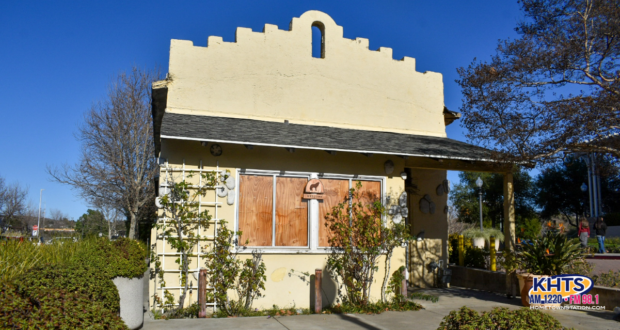
On Dec. 22, 1905, a Newhall property owner signed over rights to a plot of land on Spruce Street that would eventually become the Old Newhall Jail.
Plans to give the burgeoning town of Newhall its own jailhouse had been underway for nearly two decades by this point. In 1888, the County of Los Angeles determined that local Constable John Howe, who had been elected as a local lawman in 1878, needed a place to lock up prisoners before more serious criminals were shipped downtown for longer stays.
Initially, plans called for a jail at the end of what is now Arch Street near Newhall Creek, but the location faced opposition.
John T. Gifford, the first railroad agent and telegraph operator at the nearby Newhall train depot, strongly objected to having a jail next to his home (now the site of the Jan Heidt Newhall Metrolink Station). In an effort to protect his family’s peace of mind, Gifford purchased a parcel of land at 1026 Spruce Street for $68 and convinced the county to swap properties.
On Jan. 31, 1905, Gifford’s grant deed was recorded, and on February 20, the County of Los Angeles officially accepted a bid from H.C. Register for the construction of the Old Newhall Jail at a cost of $2,237.
Designed by the Los Angeles architectural firm Hudson & Munsell, the jail was built of concrete and featured a 1/4-inch-thick steel door cover. Construction was completed in just a few months, and by May, the jail was operational with new metal window screens and freshly whitewashed interior walls.
The Old Newhall Jail served a variety of purposes in its tenure as a holding place for criminals. During Prohibition, the Jail was used as a temporary storeroom for confiscated whiskey, as well as housing prisoners of some notoriety, such as the murderer of Constable Ed Brown, and the culprit behind the Great Saugus Train Robbery.
By October 1939, the facility had processed approximately 250 inmates that year alone before its use as a jail ceased, according to records from the nearby Newhall Sheriff’s Station. Sold to private owners in 1959, the building was repurposed for commercial use, including serving as a law office and florist’s shop, and became a lasting relic of Santa Clarita’s early law enforcement history.
Owner Manuel “Manny” Santana has recounted stories such as a 1916 escape attempt, when prisoners used a wooden bench in an effort to break out of their cells. Afterward, the wooden benches were replaced with concrete ones.
The structure can still be seen today on the north side of the Old Town Newhall Library, just a few dozen feet from another historical landmark, the American Theater.
To read yesterday’s Today in SCV History, click here.
Sponsored Articles
KHTS FM 98.1 and AM 1220 is Santa Clarita’s only local radio station. KHTS mixes in a combination of news, traffic, sports, and features along with your favorite adult contemporary hits. Santa Clarita news and features are delivered throughout the day over our airwaves, on our website and through a variety of social media platforms. Our KHTS national award-winning daily news briefs are now read daily by 34,000+ residents. A vibrant member of the Santa Clarita community, the KHTS broadcast signal reaches all of the Santa Clarita Valley and parts of the high desert communities located in the Antelope Valley. The station streams its talk shows over the web, reaching a potentially worldwide audience. Follow @KHTSRadio on Facebook, Twitter, and Instagram.