KHTS Radio Santa Clarita Radio – Santa Clarita News

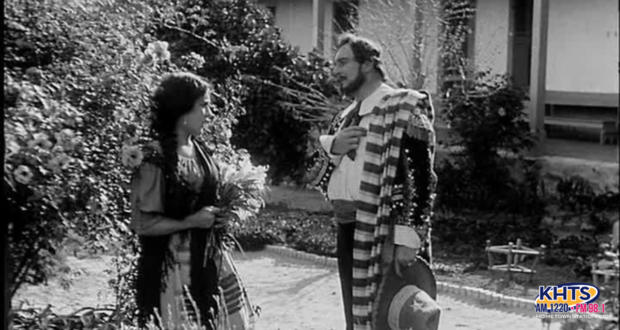
On April 2, 1910, filming of D.W. Griffith’s “Ramona,” starring Mary Pickford, the first known movie shot in the Santa Clarita Valley, wrapped up filming after two days at the historic Rancho Camulos.
The film industry was still in its infancy at the time, household names like Charlie Chaplin, Douglas Fairbanks, and even the star of “Ramona,” Mary Pickford herself, were still relative unknowns.
In light of this new industry, Griffith’s “Ramona” is the first film known to have been shot in the Santa Clarita Valley. Film crews from New York had decided to take advantage of the relatively mild weather of mid-winter in Southern California, and the rolling hills of the Santa Clara River Valley offered the perfect backdrop.
The wildly popular 1884 novel “Ramona” by Helen Jackson Hunt was deemed by Griffith to be the perfect inspiration for the many, many films the crew churned out during their time in California.
“Ramona” explores the life of the titular character, a mixed-race Scottish-Native American orphan girl in the wake of the Mexican-American War and the annexation of California into the United States.
Griffith was so insistent that “Ramona” be adapted that he secured the rights to a film adaptation at great cost. In her biography, D.W. Griffith’s wife, Linda Arvidson, reminisced:
“But in order to make a screen adaptation of this story of the white man’s injustice to the Indian, arrangements would have to be made with the publishers, Little, Brown & Company. They asked one hundred dollars for the motion picture rights and the Biograph Company came across like good sports and paid it, and ‘Ramona’ went on record. It was conceded to be the most expensive picture put out by any manufacturer up to that time,” wrote Arvidson.
Griffith is most well-known to modern audiences as the director of ‘The Birth of a Nation” (1915). One of the most financially successful films of all time and a landmark in film history, the film also drew widespread censure both at the time of its release and in the decades since for its positive portrayal of the Ku Klux Klan and support of Confederate propaganda.
During his lifetime, D.W. Griffith made approximately 500 films, only three of which were produced with sound.
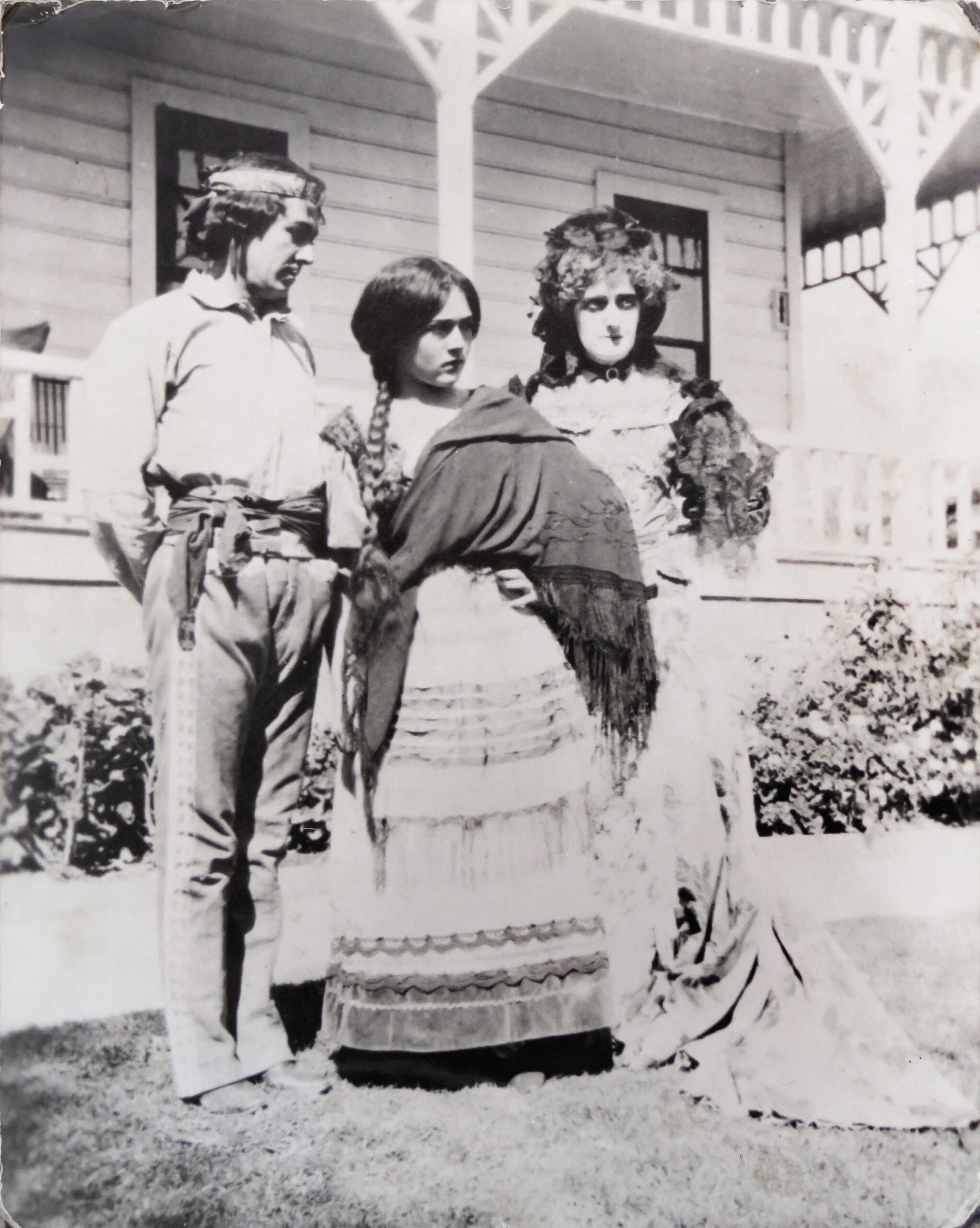
Actors Mary Pickford (Ramona, center), Henry B. Walthall (Alessandro) and Kate Bruce (Mother) in front of Piru’s Mountain View Hotel. (SCV History)
Billed as the Biograph production company’s “most elaborate and artistic movie yet,” the film was set in Rancho Camulos, the original location that inspired Jackson. Griffith used Piru’s Mountain View Hotel, as well as the chapel, adobe and patio at Rancho Camulos as backdrops for this tale that idealized the lives of early Californians under Mexican rule.
Prints of the nearly 17-minute-long finished film still exist in the Library of Congress film archive.
Visitors can still experience the historic surroundings of Rancho Camulos to this day, now a 40-acre National Historic Landmark just 10 miles west of the City of Santa Clarita.
Additionally, the white, Victorian-style Mountain View Inn in Piru still operates as a hotel and dining establishment, drawing visitors eager for a taste of California history.
To read yesterday’s today in history, click here.
Sponsored Articles
KHTS FM 98.1 and AM 1220 is Santa Clarita’s only local radio station. KHTS mixes in a combination of news, traffic, sports, and features along with your favorite adult contemporary hits. Santa Clarita news and features are delivered throughout the day over our airwaves, on our website and through a variety of social media platforms. Our KHTS national award-winning daily news briefs are now read daily by 34,000+ residents. A vibrant member of the Santa Clarita community, the KHTS broadcast signal reaches all of the Santa Clarita Valley and parts of the high desert communities located in the Antelope Valley. The station streams its talk shows over the web, reaching a potentially worldwide audience. Follow @KHTSRadio on Facebook, Twitter, and Instagram.