KHTS Radio Santa Clarita Radio – Santa Clarita News


It shows up as one number. Confident. Clean. An election is “72% likely” to go one way. A rate cut is “pegged at 88%.” Some team is “a 40% bet” to reach the final. Then the screenshot starts traveling. A cable panel quotes it. It lands in a group chat. Friends read it out like the question is already closed. And somewhere in all that forwarding, the number quietly switches jobs on us. What began as a guess about the future ends up sounding like a done deal. That is the slip. It catches clever people all the time. A market price measures how unsure we are, nothing more. It cannot tell you what already happened. Nothing has.
Where does the figure even come from? A prediction market. People there buy and sell contracts tied to real events. The price of those contracts? Read it as the crowd’s best stab at a probability. Curious about the actual plumbing? A plain-language explainer like How prediction markets work over on the prediction-markets desk at betting.net lays out the contract types and the platforms, no hype attached. Everything after that is just reading the thing right. Knowing what a probability says is half of it. Knowing what it flatly does not say is the other half. Botch that, and the number will fool you.
How a number becomes a probability

Image Courtesy of Pexels
Forget the jargon. The guts are simple. Most contracts are binary. They pay you a dollar if some stated thing happens by a stated deadline. If it does not happen, you get nothing. Say a “Yes” share on “Will Candidate A win?” is going for 62 cents. Buy it. You collect a dollar if A wins. You lose your 62 cents if A does not. Nobody pays 62 cents for a coin flip they figure is hopeless. Nobody dumps it cheap if they figure it is a lock. The price just drifts to the one spot where buyers and sellers finally quit arguing.
That resting spot means something exact. The payout is only ever a dollar or zero. So 62 cents is the expected value of a 62% shot at a dollar. Nothing fancier than that. Want the probability? Multiply the price by a hundred. Done. In a clean market the “Yes” and “No” prices add up to roughly a dollar, give or take fees and the little gap between what buyers bid and sellers ask. Here is the whole idea, plain numbers:
| Market price | Implied probability | What it does and does not mean |
| $0.10 | 10% | Unlikely, but roughly one in ten such calls should still come true |
| $0.50 | 50% | A genuine toss-up; the market is admitting it does not know |
| $0.62 | 62% | Favored, not fated; the other outcome lands nearly four times in ten |
| $0.88 | 88% | Strong favorite, yet still misses about one time in eight |
| $0.97 | 97% | Near-certain by the market’s lights, not a guarantee of anything |
Go back and read that last column. Slowly. It is the whole point here. An 88% price is not a promise. It is the market saying that, across a big pile of calls priced the same way, about one in eight of them ought to flop. So when one of those misses finally lands, the price was not broken. It was doing the exact thing it told you it would.
The wisdom, and the blind spots, of a crowd
Image Courtesy of Pexels
There is real evidence that a betting crowd can see the future pretty well. Researchers went digging in the Iowa Electronic Markets. That is a long-running academic exchange, run out of the University of Iowa. They stacked its forecasts against 964 public-opinion polls, covering five U.S. presidential elections from 1988 through 2004. Result? The market beat the polls in roughly three of every four head-to-heads. And when the call came more than a hundred days before the vote, it won every time. Not luck. A market quietly pools money, motivation, and scraps of scattered information in a way a single snapshot poll never can.
Still, slow down a second. “Usually better than one poll” is a much smaller brag than it sounds. Two economists, Justin Wolfers and Eric Zitzewitz, spent real time interpreting these prices, and they kept jabbing a finger at the fine print. How liquid is the market? How strong are the incentives? How exactly is the contract written? It all matters. One 2016 study even found something awkward: a carefully run survey, just asking people flat out for their probability estimates, came in about 12% more accurate than the market in that test. So the crowd is strong. It is not magic. A well-built poll average can match it, and every so often it can win.
A forecast, not a verdict
Image Courtesy of Pexels
Easiest way to keep this straight? Think about the weather. A meteorologist says 30% chance of rain. It rains. Nobody calls them a liar. It stays dry. Nobody calls them a genius. The forecast was about odds, and one soggy afternoon neither proves it nor sinks it. You judge a forecaster the slow way. Over hundreds of days. You check whether it rained on something close to 30% of the days they said 30%. That is the only honest test.
Market prices earn that same patience. And the record, frankly, makes the case for you. Remember the Brexit referendum, back in June 2016? On the final day, the exchange-implied odds on Britain staying in the European Union were sitting up near 85 to 90%, give or take. Voters walked out the door anyway. 51.9% to 48.1%. Same year, same shape of blunder. Then there was the night before the U.S. presidential vote in November 2016, when several markets gave Hillary Clinton north of an 80% chance. Donald Trump took the Electoral College. Here is the thing, though. Neither market ever called its outcome impossible. A real 10-to-20% event is supposed to land now and then. That is what the number means. But both nights taught the same hard lesson. A deep, busy, heavily traded market can still be overconfident, especially when everyone in it is leaning on the exact same polling story at the exact same time.
Where the price can mislead you
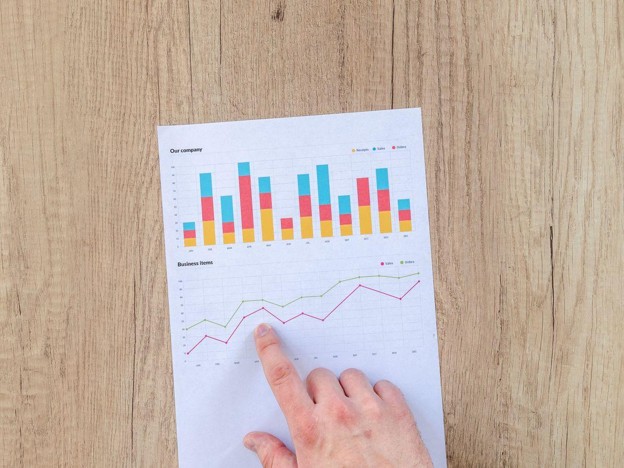
Thin markets are trap number one. In a crowded contract with lots of traders, a 70% price really is a crowd talking. A sleepy one is a different animal. The last trade could be hours stale. One modest order, all on its own, can shove the number up or down. Just eyeballing the figure, you often cannot tell the two apart. Volume matters. The bid-ask gap matters. How long since anyone actually traded? That matters too. Weigh all of it as heavily as the big percentage glowing on the screen.
Two more quirks, worth tucking away. First one is the favorite-longshot bias. Across loads of betting-style markets, long shots get priced a touch too high and heavy favorites a touch too low. So swallow every price at perfect face value and you will slightly overstate how likely the rare stuff is. Second one is the whale problem. A single big trader can move a price while knowing nothing special. Partly by eating up the orders sitting there. Partly because everyone else watches the move and assumes the big fish must know something. A lone large bet is not a forecast. But a price change that sticks, pulls in other traders, and squares with real news? Trust that one far more than some sudden lurch in a quiet market with no story behind it.
Reading the number like a reporter
Image Courtesy of Pexels
4The legal ground is still shifting under all this, and that alone is a reason to go slow. In the United States, event contracts traded on a registered exchange answer to the Commodity Futures Trading Commission. Kalshi has carried a CFTC-designated contract market label since November 2020. Then, in September 2024, a federal district court in Washington ruled the agency had overstepped when it moved to block Kalshi’s election contracts. Polymarket had a rougher trip. The CFTC ordered an operator of its event-based binary options markets to pay a $1.4 million penalty back in January 2022 and told it to wind down U.S. access. Then, in 2025, the company bought a CFTC-regulated exchange and started letting U.S. users back through the door. Meanwhile the state-by-state map keeps redrawing itself, courts still bickering over whether this or that contract really counts as gambling. So check the rules where you actually live before you act on any of these markets. Do not assume somebody already settled it for you.
None of this makes the number useless. It just makes it a source. One you weigh against the rest, same as anything else. A good reporter would poke at it first. How deep is this market? How well has it been calibrated against past results? Does the academic work hold up, the studies gathered around the Iowa Electronic Markets and the analysis in papers like Interpreting the Predictions of Prediction Markets? And what are the polls and the fundamentals saying right beside it? So read a 72% as “favored, with a real chance of being wrong.” Then cross-check it. Then watch whether it holds. Do that much, and the number finally turns into what it was always meant to be. A useful, humble guess about a future nobody owns yet. Never the last word.