KHTS Radio Santa Clarita Radio – Santa Clarita News

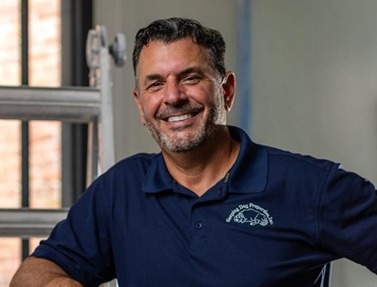
Chris Rapczynski, founder and president of Sleeping Dog Properties, began his construction journey with humble roots, gradually building one of Boston’s premier design-build firms over three decades. Established in 1993, his company has completed over $500 million in construction projects throughout Greater Boston, specializing in high-end residential and commercial renovation and construction.
From Green Thumb to Construction Maven
Rapczynski’s career started not with hammers and blueprints but with plants and soil. “I started as, when I was very young, a landscaper, and then I went into construction, and then I started buying condominiums in Boston for flipping,” Rapczynski explains. This progression from landscaping to renovation revealed his natural aptitude for seeing potential in spaces others might overlook.
The transition from landscaping to construction allowed Rapczynski to develop hands-on skills that would later inform his approach to managing complex projects. His early work flipping condominiums in Boston served as a proving ground, where he simultaneously honed his design sensibilities and business acumen.
“I’ve always been a creative person,” Rapczynski notes. “I liked the prospect of real estate and real estate development and designing. I’ve never divided those things as individual disciplines. I’ve always thought of them as all of the same thing, but just from different perspectives.”
This holistic vision—seeing design, development, and construction as interconnected rather than separate specialties—distinguished Rapczynski from peers who might excel in just one area. It also established the foundation for Sleeping Dog Properties’ integrated design-build approach.
The company’s name has an origin story reflecting Rapczynski’s practical, unpretentious nature. Rather than naming the firm after himself (a common practice in construction), he chose “Sleeping Dog Properties” after his black Labrador, who would frequently nap on job sites. This name has become instantly recognizable in Boston’s competitive construction market.
“I had a dog that would sleep on the job sites, and people always referred to the dog emotionally or in name,” Rapczynski recalls. “‘Where’s the guy with that sleeping dog? Where’s the sleeping dog?’ It was a good entree.”
Building a Reputation for Excellence
As Rapczynski’s early renovation projects gained attention, satisfied clients began requesting his services for their homes. “Clients were thrilled with my work, and they would ask me to do work for them, and it just grew out of that inspiration,” he says. This word-of-mouth growth proved crucial in Boston’s competitive construction market, where reputation drives business acquisition.
The company’s expansion coincided with Boston’s evolving luxury housing market in the 1990s and early 2000s. During this period, Sleeping Dog Properties gradually took on increasingly ambitious projects, from brownstone renovations in historic neighborhoods to commercial build-outs and eventually high-profile luxury residences.
Rapczynski credits much of his success to a philosophy passed down from a mentor: “A mentor of mine said to me a long time ago, ‘Take everything one day at a time because construction is a little bit different than many things in life.'” This advice helped him navigate the inherent unpredictability of construction work, where unexpected challenges arise daily.
“If you worry and you’re stressed, that can just go on forever,” Rapczynski explains. “While you have to be mindful of those things as a business owner, I don’t let the longer-term prospect affect me emotionally, and I look at the day-to-day and I take it day by day, and so it helps me compartmentalize all of the volume.”
This approach has served him particularly well during economic downturns and industry challenges. Interestingly, Rapczynski notes that Sleeping Dog Properties often thrives during recessions, when high-quality contractors become more available and luxury clients look to renovate rather than relocate.
Expanding Horizons Beyond Boston
While firmly rooted in Boston, Sleeping Dog Properties has strategically expanded its service area over the years. The company now takes on projects in Massachusetts’ Cape Cod region and New Hampshire’s Lakes Region, following clients who maintain vacation or second homes.
“We’re seeing a lot of requests for work in the pipeline for adding a pool or gym in their basement, or an addition, because they have that economic depth but are strategically buying,” Rapczynski observes, commenting on how economic factors influence luxury renovation trends.
When deciding whether to take on projects outside Boston, Rapczynski carefully weighs accessibility factors. He explains that requests to build in distant locations like Aspen, Hawaii, or Florida pose logistical challenges that would compromise quality control. Instead, he focuses on geographic areas within reasonable driving distance where his team can maintain the same standards that earned the company its reputation.
This calculated approach to expansion demonstrates Rapczynski’s commitment to maintaining quality over rapid growth—a philosophy that has protected Sleeping Dog Properties from the overextension that often plagues construction firms during growth phases.
Five Pillars of Competitive Advantage
When asked what distinguishes Sleeping Dog Properties from competitors, Rapczynski identifies five core factors contributing to the company’s enduring success.
First is process: “Our disciplined process is what gives us some strength and accountability,” Rapczynski states. This systematic approach to project management reduces errors and ensures consistent outcomes across diverse projects.
The second factor is quality: “We deliver quality with the spare-no-expense mentality so that there’s never a project out there that we’ve done that’s not great.” This uncompromising standard has been particularly valuable in the luxury market, where discerning clients expect perfection.
Third, Rapczynski emphasizes the importance of his team: “The people, I think we have great humans here. The human stock of our company is held in the highest regard.” This people-focused approach manifests in higher wages and stronger retention than industry averages.
Fourth is durability: “We’ve been in business for 30 years, so we’ve been delivering sustained excellence in construction for a very long period of time, and so we have great depth in that way.” This longevity is particularly impressive in an industry where 36.4% of construction firms fail within their first five years.
Finally, Rapczynski cites access to resources as a critical advantage: “We represent and have the communication of all of the suppliers and all of the material men and all of the subcontractors that make us a formidable challenge to any of our competitors.”
Together, these five pillars have positioned Sleeping Dog Properties among the top five firms in its market segment, with particularly strong performance in metrics like annual revenue and project scale.
From a young landscaper to the leader of a multimillion-dollar construction firm, Rapczynski’s journey demonstrates how vision, persistence, and adaptability can build remarkable success in a challenging industry. His path from hands-on tradesperson to executive has given him perspective across all levels of the construction business—a perspective that continues to inform his leadership as Sleeping Dog Properties enters its fourth decade.
The company now focuses not only on maintaining its reputation for excellence but also on planning for long-term succession, ensuring that the standards Rapczynski established will continue well into the future. “I think for the next generation is where my mindset is right now,” he explains, “because I have to be forward-thinking about the long planning that it takes to get a company into a position where it can have a second generation.”