KHTS Radio Santa Clarita Radio – Santa Clarita News

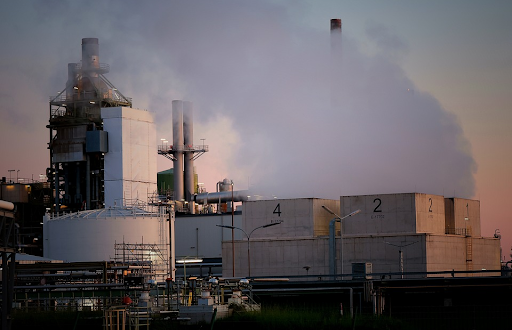
In chemical manufacturing, toxic gas exposure represents the most critical safety concern. Hydrogen chloride (HCl) poses severe risks to both personnel and infrastructure, making continuous monitoring through fixed gas detection systems essential wherever this corrosive gas is produced or used.
The Risks of HCl in Industrial Plants
Hydrogen chloride is a colorless, corrosive gas widely used in metal pickling, PVC production, and chemical synthesis. Exposure causes severe respiratory irritation, equipment corrosion, and environmental contamination if released. At concentrations above OSHA’s 5 ppm ceiling limit, HCl poses immediate health risks—making continuous monitoring both a regulatory requirement and operational necessity.
Fixed vs Portable HCl Detector: Why Continuous Monitoring Matters
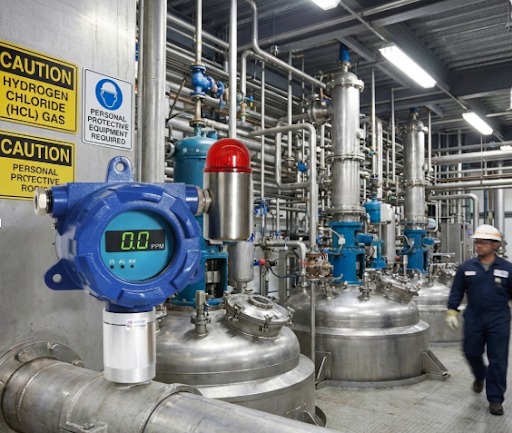
Chemical plants address HCl risks through fixed gas detection systems—permanently installed monitors that operate 24/7 in critical areas. Unlike portable HCl detectors used for spot checks, fixed systems provide uninterrupted coverage where leaks are most likely: near storage tanks, process vessels, transfer points, and enclosed areas with poor ventilation.
These systems use electrochemical sensors to detect HCl at concentrations ranging from 0–10 ppm for standard applications, with specialized units extending to 0–200 ppm for high-exposure zones. The technology integrates directly with plant control systems (DCS/PLC) through standard industrial protocols, enabling automated responses—ventilation activation, process isolation, and alarm notifications—without human intervention.
The operational advantages are straightforward: continuous protection eliminates the gaps inherent in periodic manual testing, real-time alerts enable faster emergency response, and automated data logging satisfies regulatory documentation requirements. Explosion-proof housings (IP65 or higher) ensure reliable operation even in hazardous classified areas.
Electrochemical Sensing: How Detection Works
Electrochemical HCl sensors deliver sub-ppm sensitivity with response times under 10 seconds and accuracies within ±3% full scale. Industrial-grade units use die-cast aluminum or stainless steel housings with corrosion-resistant coatings—essential for surviving continuous HCl exposure in harsh process environments.
Why Electrochemical Over Infrared or Photoionization?
The answer lies in HCl’s molecular behavior. Infrared sensors struggle with moisture interference—a serious problem since HCl readily absorbs water vapor. Photoionization detectors lack the sensitivity needed for sub-ppm detection. We’ve tested all three technologies in chlor-alkali plants, and electrochemical sensors consistently delivered the most reliable low-level detection.
But electrochemical sensors aren’t perfect. Two challenges demand attention.
The first is cross-sensitivity. Chlorine gas, often present in the same facilities, can trigger false readings if the sensor lacks proper filtering. Quality industrial HCl detectors address this through selective membranes, but it’s worth verifying specifications during procurement. Ask vendors specifically about their chlorine rejection ratio—anything below 10:1 deserves scrutiny.
The second is sensor drift. Even the best electrochemical cells gradually lose sensitivity, typically showing 5–10% degradation annually in harsh environments. This is why calibration intervals matter more than the initial accuracy specification. A hydrogen chloride detector calibrated monthly will outperform one with better specs calibrated quarterly. Most facilities we work with settle on 60–90 day cycles as the sweet spot between reliability and labor costs.
One petrochemical plant in Louisiana reduced their false alarm rate from 23 per month to fewer than 3 simply by switching from 6-month to 2-month calibration intervals. The additional maintenance time paid for itself within four months through reduced emergency responses and investigation hours.
Modern fixed HCl gas detectors from manufacturers like GasDog now incorporate field-adjustable calibration intervals and automated drift compensation, making it easier for facilities to maintain optimal detection performance without excessive labor costs.
Connecting Safety Systems and Industrial Controls
What makes constant HCl tracking useful? It links into larger safety setups without hassle. Today’s mounted sensors often send signals through 4-20 mA outputs, talk via RS485 lines, or trigger alarms using relays. This connectivity enables:
- Automated activation of ventilation fans to disperse accumulated gas.
- Process shutoffs to isolate leaks when defined thresholds are exceeded.
- Data logging and trend analysis for safety audits and regulatory compliance.
Integration sounds straightforward on paper, but the reality involves choices that affect both upfront costs and long-term functionality.
The 4–20 mA analog output remains the workhorse for a reason—it’s universal, immune to electrical noise, and every DCS built in the last 30 years understands it. However, facilities planning significant expansion might consider digital protocols like Modbus RTU or HART. The initial wiring cost runs 15–20% higher, but the payoff comes in diagnostic capabilities. When a sensor starts drifting, digital systems flag the issue weeks before it becomes critical.
Relay outputs serve a different purpose—they’re your emergency brake. When HCl concentration crosses 5 ppm (OSHA’s ceiling limit), relays can cut power to transfer pumps or trigger automated neutralization systems within 2–3 seconds. Some facilities run dual-threshold configurations: 3 ppm activates ventilation, 8 ppm initiates process shutdown. This tiered approach prevents nuisance shutdowns while maintaining safety margins.
The catch? Every relay connection represents another potential failure point. We’ve seen plants specify quad-relay outputs thinking “more is better,” then struggle with troubleshooting when one relay develops contact wear. For most applications, two relays—one for alarm, one for critical shutdown—provide adequate redundancy without excessive complexity.
Rules and Requirements
OSHA sets HCl’s permissible exposure limit at 5 ppm ceiling—meaning workers cannot be exposed to concentrations above this level at any time. The EPA’s Risk Management Program (RMP) requires facilities with more than 5,000 pounds of HCl on-site to implement continuous monitoring as part of their prevention program. But here’s what the regulations don’t spell out: how many fixed hydrogen chloride detectors constitute “continuous monitoring”?
We’ve reviewed dozens of RMP compliance reports, and the pattern is consistent. Facilities that pass EPA audits without findings typically deploy one HCl gas detector per 1,500–2,000 square feet in enclosed process areas, with additional units at every major transfer point and storage location. Underdoing it invites scrutiny.
Documentation requirements extend beyond installation. The EPA expects calibration records, maintenance logs, and alarm event histories retained for at least five years. Most modern fixed systems automate this through built-in data logging, but we’ve encountered plants still using manual logbooks—a practice that rarely survives regulatory audits cleanly.
Insurance companies are paying attention too. Several major underwriters now offer 5–12% premium reductions for facilities with certified continuous gas monitoring systems. One PVC manufacturer in South Carolina offset their entire $85,000 monitoring system investment through insurance savings and avoided OSHA penalties within 28 months.
How Many HCl Detectors Do You Need? System Sizing Guide
How many industrial HCl gas detectors do you actually need? The answer depends less on facility size and more on airflow patterns and process layout.
First question: Where does HCl naturally accumulate?
Heavier than air, HCl settles in low points—pump pits, basement areas, below-grade piping runs. A food-grade acid plant in Wisconsin initially mounted detectors at eye level throughout their facility. After a minor leak went undetected for six hours, they repositioned units 18–24 inches above floor level in potential accumulation zones. Detection times dropped from hours to minutes.
Second question: Can natural ventilation disperse leaks, or are you dealing with enclosed spaces?
Outdoor transfer stations might function adequately with one HCl gas detector per loading point. Indoor storage rooms with limited air changes require perimeter coverage plus central monitoring. We’ve mapped HCl dispersion patterns using tracer gas tests in similar facilities—the results consistently show that relying on building ventilation alone creates dangerous blind spots.
Third question: What’s your acceptable response time?
If your emergency protocol requires evacuation within five minutes of detection, hydrogen chloride gas detector placement needs to account for air mixing time. In a 10,000-square-foot poorly ventilated space, a single central detector might need 8–12 minutes to register a leak from a far corner. Four strategically placed units could reduce that to under two minutes.
Budget constraints are real. A complete system for a medium-sized chemical plant typically runs $45,000–$150,000 depending on detector count, housing requirements, and control system integration complexity. But consider the alternative cost: unplanned shutdowns in chemical manufacturing average $250,000 per day according to industry data. Even a modest leak that forces a 12-hour production halt makes the business case straightforward.
Conclusion
Hydrogen chloride monitoring isn’t a technology problem—the sensors work and integration is standardized. The real challenge is organizational: specifying systems correctly and maintaining them consistently.
The facilities that regret their monitoring investments are rare. The facilities that regret delaying installation are common. Comprehensive continuous monitoring isn’t the expensive option. Inadequate monitoring is.