KHTS Radio Santa Clarita Radio – Santa Clarita News

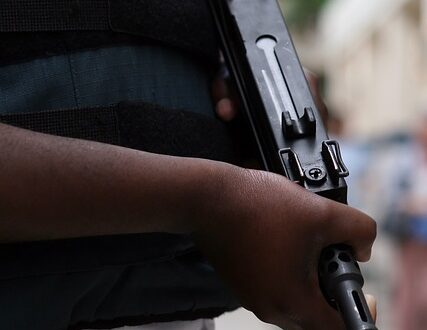
Among those who protect our safety are not only patrolmen and police officers, but also federal agents who day by day face threats and dangers risking their lives just to make sure you and I are safe and sound. These guys wear body armor for a reason.
Level III+ and Level IV armor plates are both marketed as anti-armor piercing. But is that really so? When should a federal agent of NSA, FBI, U.S. Marshalls or Border Patrol switch to Level IV armor plates? Or is Level III+ is enough? Oh, and what is Level III+ armor in the first place? Is it NIJ-certified?
What are Level III, Level III+ and Level IV armor plates
The National Institute of Justice standardizes Level III armor plates and Level IV armor plates only. Specifically, NIJ Level III is the hard armor designed to stop high velocity rifle bullets. The standard requires the tested armor plate to stop 7.62 FMJ bullets with a threshold muzzle velocity of 2780 ft/s.
For normal police duties a Level III armor plate is enough to deal with the vast majority of weapons and ammunition types that are most common on the streets. But there are threats that the Level III body armor cannot handle. For instance, the infamous “green tips” also known as “cop killers”.
Level III+ is body armor that withstands threats normal Level III armor cannot defeat. It is something in between Level III and Level IV, but it still plays in the same league as Level III armor. It cannot stop real armor-piercing bullets.
Level IV, on the other hand, is tested against extremely dangerous ammunition such as .30 caliber (M2 AP, armor piercing) bullets.
Important: there is no one universal Level III+ body armor standard
The National Institute of Justice does not conduct any tests to certify armor as Level III+. This entire class of body armor is designed, developed, and tested exclusively by body armor manufacturers. And here are two important conclusions one can make:
- Every Level III+ armor is different. What we mean by that is that every manufacturer tests its Level III+ armor against only selected ammo types above M80 that normal Level III handles. And there is no one standard, industry-wide way to conduct such tests. Every armor manufacturer can use its own test apparatus and protocols. And this means that Level III+ armor from one manufacturer and the similarly labeled Level III+ armor from another vendor may vary significantly in their real-world bullet-resistance performance!
- Look at ballistic test results before purchasing Level III+ body armor. As you now know, the “Level III+” labeling is merely a placeholder for “our armor can stop more than Level III”. But how much more? What ammunition exactly can it stop? Ask the manufacturer! Make sure to look at ballistic tests and see what this particular piece of armor is rated to defeat.
Level III+ armor in details
Level III+ is more than a marketing gimmick designed to convince unaware customers into buying the product. On the contrary, Level III+ has its true merits and is essentially a special threat body armor type as the NIJ formulates this (see NIJ 0101.06 Appendix B). The whole purpose of Level III+ is to stop rifle rounds that are better penetrators than the standard M80 the NIJ tests Type III armors against.
Materials of Level III+ body armor
The most typical material for Level III+ armor plates is polyethylene. Of course, this is not your everyday PE, but a special kind of ultra-high molecular weight polyethylene that develops extremely strong molecular bonds that prevent the projectile from penetrating the plate.
The next common Level III+ armor material is steel alloys. Modern alloys such as AR500 or AR650 are hard enough to deflect high-velocity bullets, even those the standard Level III armor cannot defeat.
Apparently, each material has its pros and cons. PE armor plates are extremely lightweight (below 2-3 lbs), while steel plates are much heavier. Then again, steel can efficiently deal with multiple shots, while PE tends to degrade with every shot and eventually becomes ineffective. Also, PE armor plates are 2-3 times more costly. On the other hand, Level III+ steel armor may cause bullet fragmentation, which may lead to secondary injuries of limbs by shrapnel.
What threats Level III+ armor can stop
As we underscored above, each Level III+ armor is rated by its manufacturer to stop certain bullets. You should really check each armor individually to learn what threats it can protect you from.
Overall, Level III+ body armor is often rated against:
- 5.56x45mm 55 grain ball (M193)
- 7.62x39mm PS ball (MSC)
- 7.62x51mm 149 grain M80 FMJ
- 5.56×45 M855 (3,100 ft/s) – the “green tip” bullet
- and sometimes even M855A1 rounds (for combined UHMWPE+ceramic armor plates)
Level III+ armor can withstand at least 6 hits of the above bullets.
Who typically wears Level III+ armor
With the increased safety Level III+ provides, no wonder federal agents are interested in it much more than law enforcement officers in the police. The reasons are pretty clear, really:
Let’s take FBI agents. They get involved in the crime response and prevention process only when things get really tough. FBI agents deal with much more dangerous and potentially heavily armed criminals. So, relying on basic Level III armor is not acceptable for them.
NSA and ATF agents. Their duty is to chase and catch international criminals and terrorists who are not particularly law abiding, so they can use any exotic or prohibited ammunition that can penetrate the standard Level III armor.
Customs and Border Protection agency (CBP) officers also need improved protection above the NIJ standard for Level III armor. Stopping drug and human traffic through the border may result in heavy gunfights where every kind of rifles and automatic weapons such 5.56×45 mm Kalashnikov can be used against our border protectors. And indeed, Border Patrol agents are constantly being shot, and not from pistols. In order to remain unnoticed and shot from a distance, traffickers have to use rifles. And the ammunition is also rarely the plain M80.
U.S. Marshalls often chase criminals that desperately don’t want to be caught. They have nothing to lose, so they can use any means to remain uncaught. Relying onto Level III+ armor for U.S. Marshalls only seems a reasonable safety measure.
Why Level III+ armor may not be enough
Remember: Level III+ armor is just the enhancement of the standard NIJ Level III (and is certified as such), so it cannot withstand the most dangerous rounds.
Here are some examples:
- Level III+ may not stop “green tip” 62 grain projectile (M855) if multishot. Yes, some Level III+ steel armor plates are rated to stop this, but neutralizing multiple shots is a whole different story, especially for polyethylene armors.
- The M855A1 is even more dangerous and very few Level III+ can reliably defeat this ammunition.
- Then, there is 5.56 “black tip” 75 grain ammo. You cannot legally buy it in the U.S., but we are talking about criminals here, are we?
- There could be other non-standard or less common international rounds that Level III+ cannot deal with.
- Finally, there are .30-06 M2 AP armor-piercing rounds. They penetrate through Level III+ like a hot knife through butter.
If a federal agent expects to face one of these threats, he or she should switch to Level IV armor plates. Level III+ will not be enough here.
Level IV armor in details
Level IV offers the top-most protection within the NIJ standard. According to NIJ 0101.06, the Type IV armor plates in a conditioned state must withstand .30 caliber armor piercing (AP) bullets (M2 AP) with a specified mass of 10.8g (166 gr) and a velocity of 2880 ft/s.
Materials of Level IV armor
Given the threats the Level IV armor has to withstand, it requires more than just bare steel or synthetic fibers used in lower level armors. And indeed, body armor rated as NIJ Level IV is based on the following materials:
Steel combined with aramid fiber is historically the first option. Modern steel grades are extremely hard, so they cannot be penetrated even by such high-energy bullets as those fired from sniper rifles, provided the armor plate is thick enough. Synthetic fibers add an additional layer of defense by slowing the bullet down during impact and preventing fragmentation damage.
Steel is heavy, and you need a lot of steel to make an efficient Level IV armor, so steel is currently superseded by more technology-driven materials.
Ceramic plates are another option. They quickly absorb the damage, transforming the energy of the impact to deformation of the ceramic material, just like the collision bumper of a car deforms on impact to reduce the damage done to passengers.
The way ceramic defeats bullets is its primary disadvantage: it cannot efficiently deal with multiple shots, because the plate degrades with each subsequent bullet. The NIJ standard requires the Level IV armor to be effective against just one shot of .30-06.
Finally, there is polyethylene. It is rigid enough to slow down the bullet and capture it, preventing it from penetrating the armor plate.
That being said, the most efficient and performing Level IV armors use some combination of the above materials.
Who typically wears Level IV armor
Anyone who may face threats that pose a problem for both Level III and Level III+. Provided how many illegal rounds are there, you need to wear Level IV armor anytime you could potentially face an AR-15 loaded with any illegal or beyond standard ammunition. There is no protection better than Level IV.
FBI, ATF, DHS and other federal agencies that protect our country and civilians may require extra protection for their agents in some situations.
Many criminal bands deliberately use “cop killer” ammunition to deal with law enforcement officers who wear Level III or III+ armor. Such ammunition include M855 “green tip” and M855A1 rounds. And the most popular AR-15 rifle is not too hard to adjust to firing these rounds.
Organized crime and terrorists can even use .30-06 caliber rifles or .308 Winchester rifles modified for .30-06. A shot with this ammo can pierce through wooden walls or car doors, not to mention Level III (plus or not) armor. In order to protect those who protect us, the best available defense is a must.
Special units and Military are also common users of Level IV armor, but that is totally understandable: they routinely face military-grade weapons and just can’t go without adequate protection.
Conclusion
To summarize everything we said above: Level III+ is not NIJ certified, and every armor sold as Level III+ is in fact certified as NIJ Level III. The extra stopping capability is tested by the manufacturer and you should always ask for testing certificates that confirm performance of Level III+ armor of this specific manufacturer.
Level III+ armor continues saving lives when Level III fails, but even this additional protection may not be enough when it comes to international terrorists and organized crime. In this case we recommend federal agents to select Level IV armor as the best available armor type delivering maximum protection.