 KHTS Radio Santa Clarita Radio – Santa Clarita News

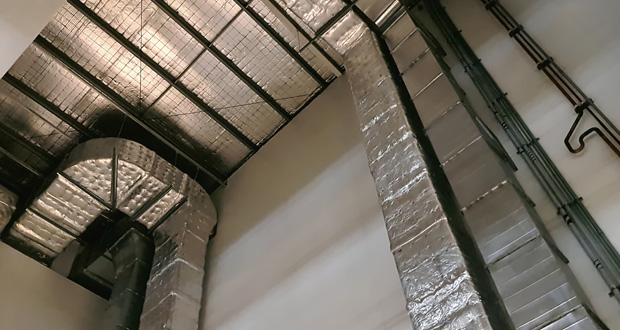
Duct cleaning is the action of keeping the air ducts neat and smooth. It is such a specialized process that you need reliable Air Duct Cleaning Equipment that can take away the mold as well as contaminants from the air cooling and heating ductwork.
Air ducts are really prone to dirt and other small particles that lead to the bad circulation of air towards your own house. In this sense, one of your family might acquire the disease from this. This is true as most houses accumulate 40 pounds of filth and particles from their air ducts. Regarding this, it is really advisable to approach someone you know who is a professional in this field.
Air duct cleaning is a process of acquiring the dirt from your air ducts that keeps it from performing well. It is by absorbing the dirt that is present from the ducts. These include specific parts such as the heat exchangers heating along with the cooling coils, the supply and return air ducts along with the registers, heat exchangers heating along with the cooling coils, grilles, and diffusers, condensate drain pans (drip pans), together with the fan motor and fan housing. This includes the air handling unit too. The prior statement is from the EPA. The dirt that flows within air ducts can penetrate the house easily and this is considered a popular health hazard for any US citizen. However, inquiring about air duct cleaning will boost the good atmosphere of your house. With this, your home will be much safer for your family.
The Air Duct Cleaning Process
If you can ask how this is done, then here is the answer for you. Negative pressure technology has been used in this. Negative pressure technology addresses the problem purely. The outcome is clean and smooth. However, some establishments put dirt on this statement.
Step 1: Inspection Of The Ducts
First and foremost, we cannot really see the problem that has been occurring in the air duct that is why we must observe it. Fortunately, anyone can do this, even as the owner of the residence or commercial building. Afterward, you can distinguish its outcome after being cleaned.
Another thing is an expert duct cleaner tends to check for any problem all throughout the ducts, including leaks and many more. They have their own cameras that can watch for any leaks or issues inside the air duct for them. Additionally, they can restore the air duct to its original function or even replace some parts.
Step 2: The Importance Of Creating A Negative Pressure
If a technician starts to work on the duct. They come up with preliminary things that are needed for the actual process. They use this dust sucking vacuum device that can absorb the dirt from your air duct.
One of the preliminary tests that they conduct is they trace down the heart of your HVAC system then put the device there. The duct technician will open a part that will have access for the hose to get in and then lock it so no air could get through.
Bear in mind that the ducts comprising the air that has been treated and the air that has been going towards it are split apart that is why each task will be done on both sides. Another crucial move is getting a strong lock that no air could escape when attaching the hose towards the opened area. This must be done properly as the vacuum concept won’t definitely work.
For a better understanding, when the technician finishes these tasks, they will proceed to the vacuum unit. Furthermore, the process will allow for negative pressure in the air ducts. This pressure will then pull each and every particle in the air duct, and if there is dirt stuck, they will brush it to get loose.
Step 3: Stir The Dust
If the air duct is already in the negative pressure, the technician will open up every part of it and clean the ducts here and there. You can clearly tell an expert technician from a bad one because they will make sure that they take their time really well.
The bad technician is usually hasty in its action, and they seem to be in a hurry. They just did air compressing here, then put some sanitizer, and they are all done. This is not effective in doing air duct cleaning.
A certified technician will take their time and use some kind of revolving brush and other tools to swallow up the dirt and debris towards the vacuum device.
Step 4: Clean The Other Parts Of The System
The blower motor, evaporator coil as well as drain pan must be cleaned along with the air duct. They are as important as the HVAC system and this is prescribed by the NADCA.
The restrainer of the air must be cleaned as well. By following these tips, rest assured that your HVAC system will have better sustainability, will properly work, and will still be efficient. If you have more questions to ask, visit us as we present to you the maintenance tips for having a better HVAC.
More Information About The Air Duct Cleaning Process
The right way of doing the process will give you a satisfying outcome. The kind of tools or devices like the Air Duct Cleaning Equipment are not totally the only big factor to consider, but then the proper method must be done as well. You will come up with a neat and smooth air duct in your place by doing such things.
Dislodging The Impurities:
To entirely cleanse the air duct, including the particles that are glued to the side. The technician used brushes and other tools that will detach these particles from the air duct towards the vacuum device.
Here is a brief explanation. As we installed the negative pressure on the air duct by our device, every small substance that flows freely within the air duct will certainly be absorbed by our device. This makes sure that no substances will return to the duct after washing it.
Most residential and commercial buildings have a specific type of HVAC system. With this in mind, the technician will still follow the original way of doing it, such as going through your air ducts by the supply register, cold air returns. They will also penetrate the air duct to create an opening for the general cleaning along with using a really good Air Duct Cleaning Equipment to make sure the job is done – one that will last a long time. All these actions are to be done only by trained personnel.
Final Words On The Air Duct Cleaning Process
Air ducts are an essential part of your house or building. It serves as the temperature regulatory agent inside the place. It is like veins wherein blood flows all over the body. This is true for the air duct, as it delivers the warm and cool winds to a specific area of the place. Regarding this, cleaning it and conducting maintenance is as important as its role in the house.
Sponsored Articles
KHTS FM 98.1 and AM 1220 is Santa Clarita’s only local radio station. KHTS mixes in a combination of news, traffic, sports, and features along with your favorite adult contemporary hits. Santa Clarita news and features are delivered throughout the day over our airwaves, on our website and through a variety of social media platforms. Our KHTS national award-winning daily news briefs are now read daily by 34,000+ residents. A vibrant member of the Santa Clarita community, the KHTS broadcast signal reaches all of the Santa Clarita Valley and parts of the high desert communities located in the Antelope Valley. The station streams its talk shows over the web, reaching a potentially worldwide audience. Follow @KHTSRadio on Facebook, Twitter, and Instagram.






An air duct is an important part of any heating and cooling system. A dirty air duct can cause significant problems with your home’s ability to maintain a comfortable temperature. Cleaning your air ducts regularly can help to preserve your HVAC system and save you money on energy bills. Here are some tips for cleaning your air ducts:
1. Check the seals around the ductwork for signs of wear or damage. If there are any issues, have them fixed before proceeding.
2. Use a vacuum cleaner with a hose attachment to clean the interior of the ducts. Be sure to use a crevice tool to get into corners and around pipes and bends.
3. Make sure to remove all dust, lint, and debris from the fan blades, filters, and housing before spraying insecticide onto them.