KHTS Radio Santa Clarita Radio – Santa Clarita News

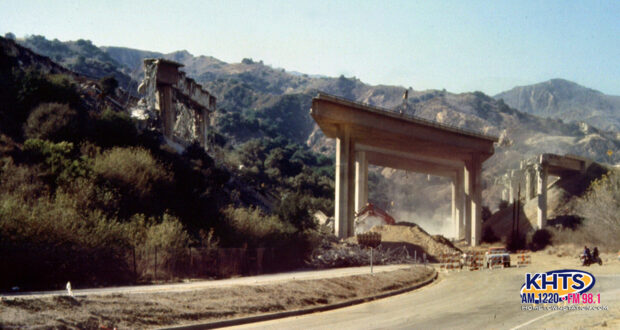
For the Santa Clarita Valley 31 years later, the 1994 Northridge earthquake was a defining moment, testing the resilience of its residents and the strength of its community institutions.
On the morning of Monday January 17, 1994, a mammoth earthquake of magnitude 6.7 struck the San Fernando Valley, causing widespread devastation and shockwaves throughout Los Angeles and forever changing the Santa Clarita Valley.
Residents throughout the County were abruptly awakened by their homes and beds violently shaking, accompanied by the shattering of glass and numerous other disruptive sounds, disrupting what would have otherwise been a typical Monday morning.
Centered in Reseda, the quake’s effects were acutely felt in the Santa Clarita Valley, where buildings collapsed, infrastructure was severely damaged, and lives were upended. The earthquake resulted in the loss of 57 lives.
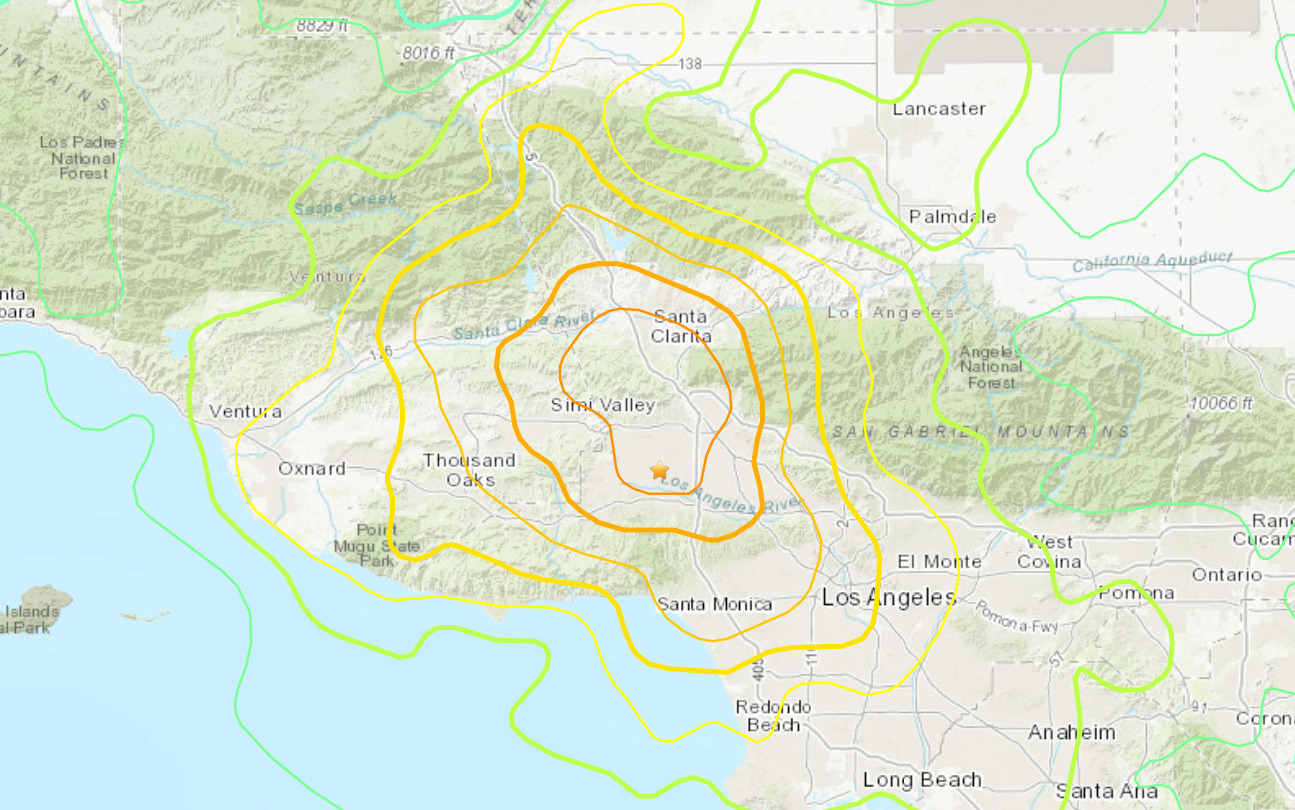
An intensity map of the 1994 Northridge earthquake.
“I really didn’t recognize it as an earthquake. It was so violent. I was thinking, you know, there was a bomb that went off or some truck ran into my house. It just seemed too violent,” said Ken Pulskamp, then-City Manager in a previous KHTS article.
Major roadways like the I-5 and SR-14 freeways suffered significant damage, severing critical transportation links and isolating communities. Power outages, ruptured gas lines, and water shortages compounded the challenges for residents.
“It was a very, very scary time,” said Gail Morgan, then-spokesperson for the City. “It looked like we’d been hit by a bomb. There were fires everywhere, downed power poles.”
In Lancaster, Los Angeles Police Department (LAPD) Officer Clarence Wayne Dean, a 27-year veteran of the department, departed his residence several hours prior to his scheduled shift and embarked on his motorcycle. He proceeded southward on the 14 Freeway. Individuals familiar with Dean speculated that his departure was likely motivated by his desire to assist in the recovery efforts that were anticipated following the seismic tremors.
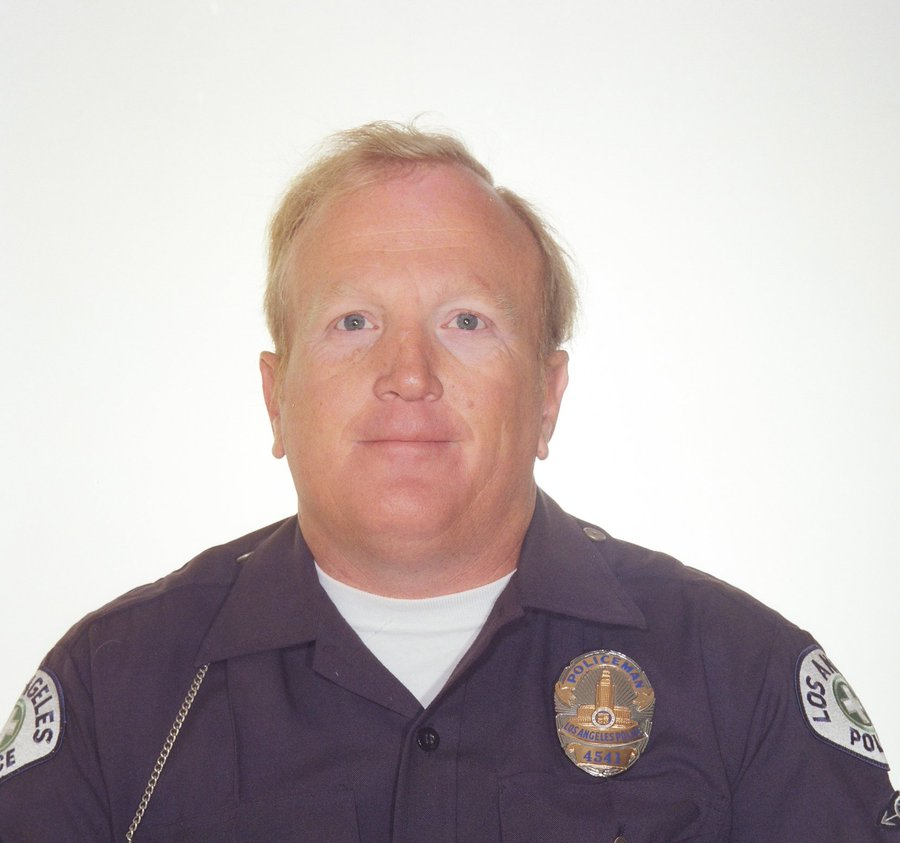
Photo courtesy of LAPD
Tragically, Dean would never make it to work, instead becoming one of the 57 confirmed fatalities of the day.
“I was running maybe five, six minutes early that morning,” said Scott Harries, a Valencia resident who had also been driving on the southbound 14 Freeway that morning. “All of a sudden, there was this, just, big cloud of dust that was starting to envelop me. As I came out of this cloud of dust, I could see on the road that there were some bumps in the highway.”
Harries had been one of the last people to cross the State Route 14 overpass before it collapsed onto the 5 Freeway in the Newhall Pass just south of Santa Clarita.
“All of a sudden, I started hearing this sound, almost like a gun going off,” Harries said. “Then after I heard it, then I could hear, you know, rocks hitting cement and rolling, and I thought, ‘what the heck is that?’”
Disguised by the darkness, made worse by widespread power outages preventing any street lighting, Officer Dean was unable to see the end of the road at the 5-14 split and plunged at least 30 feet to his death.
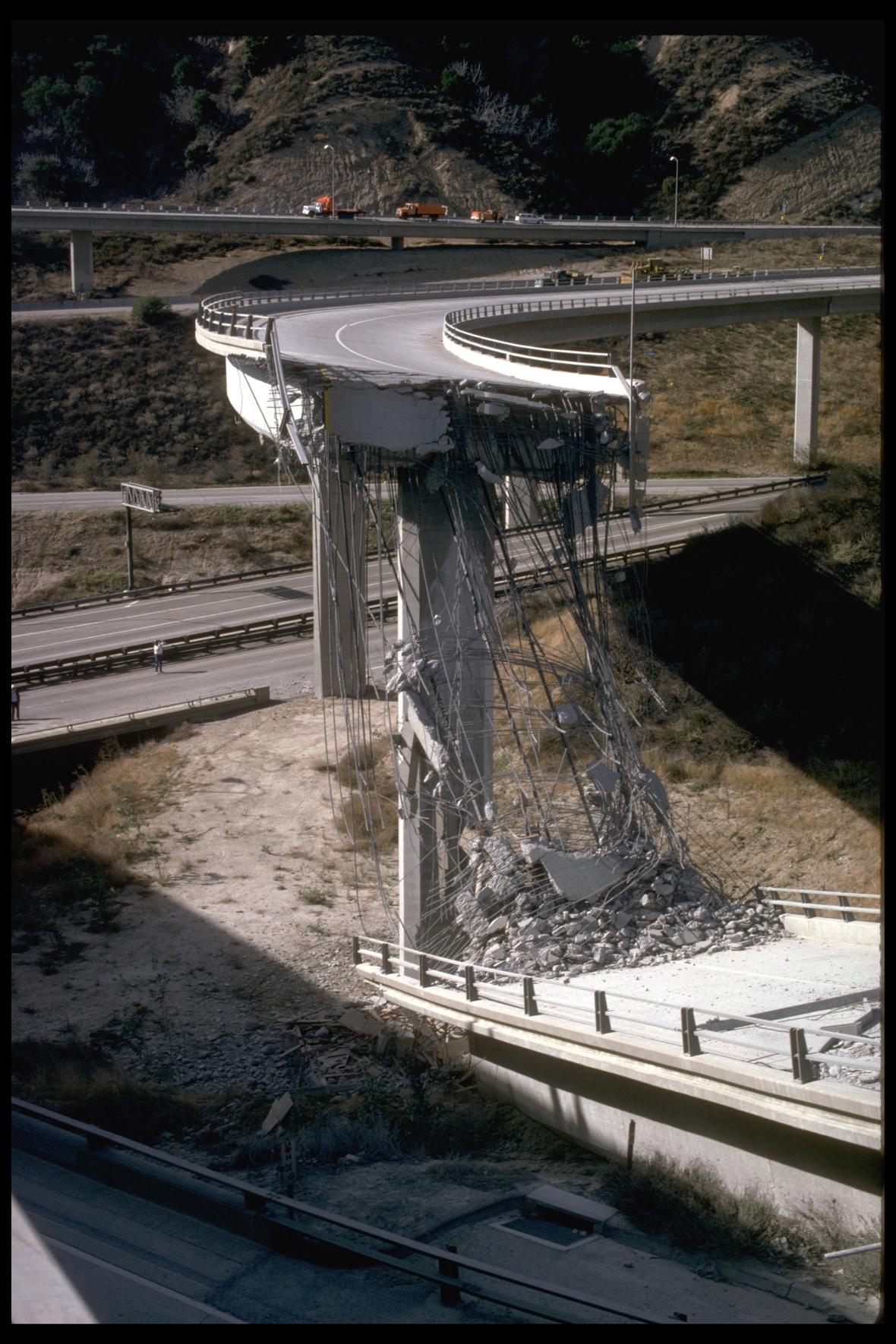
Photo courtesy of USGS
“He could have come up with a million excuses why he couldn’t go to work that day,” Officer Bill Harkness, Dean’s colleague in the LAPD’s Valley Traffic Division and a friend for 27 years, told the California Peace Officer’s Memorial Foundation. “But he got up, put on his uniform and went in. I consider Clarence Wayne Dean a hero,” Harkness continued. “No, he’s not a textbook hero. He was an everyday hero, the guy who made you feel good, who knew his obligation to his city.”
In the aftermath of the quake, communication became a lifeline. KHTS Radio, then KBET, played an indispensable role in disseminating information and keeping the community informed. Despite technical difficulties and power outages, the station’s staff worked tirelessly to deliver real-time updates on road closures, emergency services, and recovery efforts.
“I went up to the transmitter site; everything was intact, other than no power. And then I drove back down with the four or five miles over to Sierra and Soledad, walked in the radio station and our morning announcer was already there,” said Carl Goldman, owner of KHTS/KBET radio
The station’s broadcasts provided a platform for residents to share resources, locate loved ones, and learn how to access aid. Interviews with first responders and local officials offered transparency and direction, while community stories highlighted acts of courage and resilience.
“AJ Morgan and Barry McKeever went up to the transmitter site, jury-rigged a little portable studio we used for remotes, and they started broadcasting,” Goldman continued.
The tight-knit community of the Santa Clarita Valley became even tighter, as residents came together to help neighbors, provide resources, and share information.
Of those who were there during the immediate aftermath of the Northridge quake, many recognized Adele Macpherson for her tireless efforts as the City’s Emergency Coordinator.
“When I first came into the city, I met Adele; she was still kind of in the thick of recovery, if you will, putting together the programs that we still utilize today,” said Ken Striplin, current Santa Clarita City Manager. “Wonderful lady. She knew a lot about emergency response (and) emergency preparedness.
Adele Macpherson passed away on August 8, 2021, after a battle with cancer.
In a video interview for the 1995 State of the City presentation, Macpherson reflected on the lessons learned from the Northridge earthquake. While the disaster was devastating, it also provided insights that have shaped how the young community responds to unexpected crises.
“One thing we learned following the Northridge earthquake is that earthquakes are survivable,” Macpherson said. “With proper planning, preparedness, and simple steps taken ahead of time, it truly makes a difference.”
Today, the City of Santa Clarita activates its Emergency Blog at santaclaritaemergency.com during emergencies, providing real-time updates on evacuation orders, shelter locations, road closures, and other critical information in response to fires, earthquakes, landslides, and floods.
The impact of the Northridge earthquake also led to broader initiatives, such as the creation of the Great California ShakeOut in 2008, an annual statewide earthquake safety drill practiced in homes, businesses, and schools. More recently, the United States Geological Survey (USGS) introduced the ShakeAlert Earthquake Early Warning System, which provides advance notice of impending earthquakes.
For residents who lived through the quake, the memories remain vivid. The anniversary serves as a reminder of the fragility of life and the importance of community solidarity in the face of adversity.
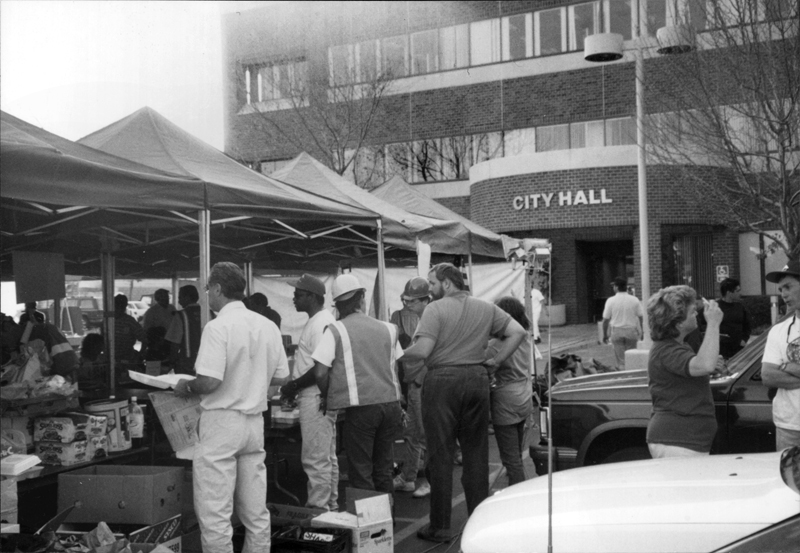
Photo courtesy of SCV History.
Sponsored Articles
KHTS FM 98.1 and AM 1220 is Santa Clarita’s only local radio station. KHTS mixes in a combination of news, traffic, sports, and features along with your favorite adult contemporary hits. Santa Clarita news and features are delivered throughout the day over our airwaves, on our website and through a variety of social media platforms. Our KHTS national award-winning daily news briefs are now read daily by 34,000+ residents. A vibrant member of the Santa Clarita community, the KHTS broadcast signal reaches all of the Santa Clarita Valley and parts of the high desert communities located in the Antelope Valley. The station streams its talk shows over the web, reaching a potentially worldwide audience. Follow @KHTSRadio on Facebook, Twitter, and Instagram.