 KHTS Radio Santa Clarita Radio – Santa Clarita News

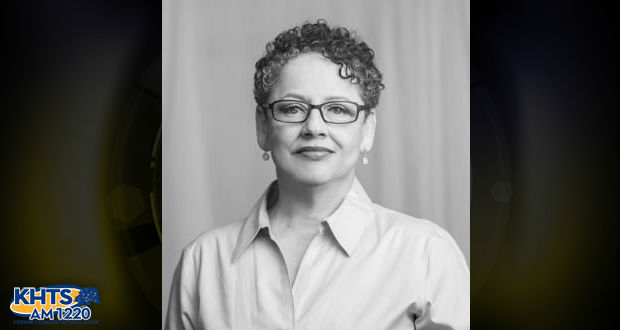
Today, as I sit here and watch the news coverage of the 4 killed, including a young boy, in my own hometown of Santa Clarita, my heart is breaking. The coverage is centered around how we as fellow neighbor’s, family and friends will be affected by such a tragedy.
The conflict that I am feeling centers around the fact that 4 people died, and we must stop for a minute and understand that. This family was from our very own community. They had friends. They were loved. They were a part of our humankind. They were our Santa Clarita brothers and sisters. My heart truly hurts when I stop to think for a minute that they were hurting. That they were in pain. Questions run through my mind. Did their close neighbors know? Did they reach out for help? Were there signs prior to the shootings?
But the question that will always come to our mind is WHY?
If you were to spend five minutes researching the same type of instances over the past, you’d find that unresolved grief is in most cases common the denominator that connects all these painful events.
Suicide is not foreseeable. To some degree it can be determined that someone may be at risk of death by suicide. We know for a fact as Greif Recovery Specialist, there is no way to definitively predict if or when an individual may choose to take their own life and or harm their family.
I know that this will sound like a cliché. We may never have the true answer as to WHY. What is truly important for us now is to start our grieving process as a community, neighbors and most importantly the family.
Our friends and family tend to provide less support than we expect from them. This is something that we, as Grief Recovery Specialist, hear from grievers on a regular basis. There are multiple reasons why this is the case.
The most obvious one is that most of them have had little or no education in how to deal with their own loss. That being the case, it is difficult for them to offer any more assistance than suggesting things like the misinformation of:
· Don’t feel Bad
· Just give it time4
· Time will heal your pain
· Keep Busy. Go back to work
Grief is a normal and natural reaction to a loss of any kind. You don’t need to be “fixed” to feel better. You simply need to just be. Do talk about your experience with close friends and family. Some of the most typical responses associated to grief are: reduced concentration, a sense of numbness, disrupted sleeping patterns, changed eating habits, roller coaster of emotional energy. You may experience these on the same day or none of them.
Grief is unique and individual to each person. As a Grief Recovery Specialist, I know that tears may or may not be a sign of grief. You may absolutely be crying non-stop. Keep in mind that grief is normal and natural and this sign of emotions pouring out is okay. It is also equally okay if the tears do not come. It is not uncommon for the sense of numbness to take over and for the tears not to come right away. We must be okay with whatever response we have.
Most importantly we must teach our children how grieve. It is perfectly ok to show these emotions to our children. Remember they do not know how to grieve they are watching you for every signal of what to do. When talking to our children about grief:
DO – Go first. As the adult, you are the leader.
DO – Tell the truth about how you feel. Telling the truth about your own grief and about how you feel will establish a tone of trust and make your child feel safe in opening-up about his or her own feelings.
DO – Recognize that grief is emotional, not intellectual and that sad or scared feelings are normal. Avoid the trap of asking your child what is wrong, for he or she will automatically say, “Nothing.”
DO – Listen with your heart, not your head. Allow all emotions to be expressed without judgment, criticism, or analysis.
DO – Remember that each child is unique and has a unique relationship to the loss.
DO – Be patient. Don’t force your child to talk. Give your child time. Make sure to plant healthy ideas about talking about feelings.
DON’T – Say “Don’t Feel Scared.” Fear is a common and normal response.
DON’T – Say “Don’t Feel Sad.” Sadness is a healthy and normal reaction. Sadness and fear, the two most common feelings attached to loss of any kind, are essential to being human.
DON’T – Ask your children how they are feeling. Like adults, fearful of being judged, they will automatically say, “I’m Fine,” even though they are not.
DON’T – Act strong for your children. They will interpret your “non-feeling” as something they are supposed to copy.
DON’T – Compare their lives or situations to others in the world. Comparison always minimizes feelings.
DON’T – Make promises that you cannot keep. Instead of saying “Everything’s going to be okay,” say, “We’ll do everything we can to be safe.”
DON’T – Forget that your children are very smart. Treat them and their feelings with respect and dignity as you would like to be treated by others.
The fact that some of us, adult or child, are afflicted by our own fears does not reduce the fact that as parents, teachers, and guardians of our young people, we must learn effective ways to deal with our own grief so we can help them with theirs.
-Sharon Brubaker
Sponsored Articles
As Santa Clarita’s only local radio station, KHTS mixes in a combination of news, traffic, sports, and features along with your favorite adult contemporary hits. Santa Clarita news and features are delivered throughout the day over our airwaves, on our website and through a variety of social media platforms. Our KHTS national award-winning daily news briefs are now read daily by 34,000+ residents. A vibrant member of the Santa Clarita community, the KHTS broadcast signal reaches all of the Santa Clarita Valley and parts of the high desert communities located in the Antelope Valley. The station streams its talk shows over the web, reaching a potentially worldwide audience. Follow @KHTSRadio on Facebook, Twitter, and Instagram, and sign up for KHTS email and text alerts today!





How may I contact her??