KHTS Radio Santa Clarita Radio – Santa Clarita News

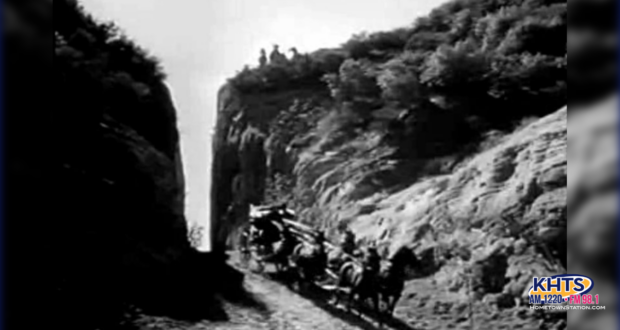
On Feb. 15, 1939, John Ford’s “Stagecoach” premiered in Los Angeles, forever changing the landscape of the Western film genre – and featuring an iconic Santa Clarita landmark.
The movie, which propelled John Wayne to stardom and set a new standard for cinematic storytelling, was largely filmed in Monument Valley. However, a small yet significant piece of “Stagecoach” history was captured right here in the Santa Clarita Valley—with approximately seven seconds of footage shot at Beale’s Cut.
Beale’s Cut, a historic passageway carved through the San Fernando Pass in 1863, played a crucial role in California’s early transportation and commerce.
Commissioned by Edward Fitzgerald Beale, this 90-foot-deep cut allowed easier passage for stagecoaches and travelers moving between Los Angeles and the northern territories. For decades, it was a vital link for trade and migration, long before highways reshaped the region.
By the time “Stagecoach” was filmed, Beale’s Cut had already been featured in numerous silent films and early Westerns, further cementing its place in Hollywood history.
Though “Stagecoach” is often remembered for its Monument Valley landscapes, Santa Clarita Valley—and Beale’s Cut in particular—played a small role int he film’s legacy, with seven seconds of footage definitively identified as having been filmed in SCV.
Lauded as one of the most influential films ever made, “Stagecoach” redefined the dying Western genre, introducing archetypal characters who transcended the genre and dynamic storytelling.
The film follows a group of strangers traveling through dangerous Apache territory, each with their own struggles and secrets, including John Wayne, then no more than a B-movie actor.
In his autobiography, “My Life East and West,” actor and Newhall resident William S. Hart criticized the choreographed action for not being realistic enough for his tastes.
Hart said the chase scene would have been more realistic if Ford had the Indians shoot the lead horses pulling the stagecoach. Ford reportedly responded, “In actual fact that’s probably what did happen, (but) if they had, it would have been the end of the picture, wouldn’t it?”
Instead of an inauspicious end filled with arrows, the U.S. Calvary arrived just in time to save the day.
The film marked a turning point in John Ford’s career, as well as in Hollywood’s perception of Westerns as serious cinematic works rather than simple B-movie action pieces.
The film earned seven Academy Award nominations, winning two—for Best Supporting Actor (Thomas Mitchell as the drunken Doc Boone) and Best Score.
Sponsored Articles
KHTS FM 98.1 and AM 1220 is Santa Clarita’s only local radio station. KHTS mixes in a combination of news, traffic, sports, and features along with your favorite adult contemporary hits. Santa Clarita news and features are delivered throughout the day over our airwaves, on our website and through a variety of social media platforms. Our KHTS national award-winning daily news briefs are now read daily by 34,000+ residents. A vibrant member of the Santa Clarita community, the KHTS broadcast signal reaches all of the Santa Clarita Valley and parts of the high desert communities located in the Antelope Valley. The station streams its talk shows over the web, reaching a potentially worldwide audience. Follow @KHTSRadio on Facebook, Twitter, and Instagram.