KHTS Radio Santa Clarita Radio – Santa Clarita News

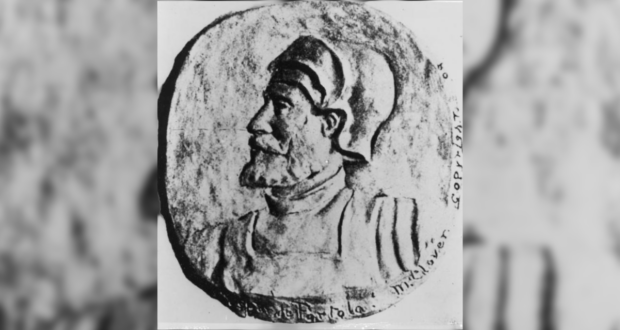
On this day in history, Aug. 8, 1769, the Portolá Expedition — the first overland Spanish exploration of Alta California — crossed through what is now known as the Newhall Pass, entering the Santa Clarita Valley.
The trek, led by Governor Gaspar de Portolá and accompanied by engineer Miguel Costansó and Father Junipero Serra, marked a pivotal moment in California history as the Spanish sought to chart a land route from San Diego to Monterey.
Costansó, who kept a detailed diary of the journey, wrote that on Aug. 8, 1769, the party entered the “mountain range” — today’s Newhall Pass — traveling through narrow canyons and steep, barren hills.
The group descended into a small valley near present-day Elsmere Canyon, where they encountered a Tataviam village. This ancient settlement, whose exact location remains undiscovered, may have been Tochonanga, possibly near today’s Eternal Valley Cemetery.
They camped near a stream rich with willow and poplar trees, likely Elsmere Creek, and noted the abundance of native inhabitants, who lived in simple shelters of branches. Through sign language and guidance from the Tataviam, the explorers learned of a more passable coastal route to the north.
This August 8 stop in Santa Clarita was more than just a waypoint; it offered a revealing glimpse into the region’s geography, ecology, and Indigenous life before the influx of European settlers.
Costansó described the land as “pleasing and picturesque,” dotted with tall oaks and running water, a striking contrast to the region’s current arid appearance.
The expedition’s journal also records a curious hydrological phenomenon: streams that flowed abundantly at night would vanish under the heat of the sun by midday. Though some might romanticize the Santa Clara River of the past as a mighty, navigable waterway, Costansó’s notes suggest a more modest, seasonal flow, albeit more visible and consistent than what’s observed today.
Following their rest on August 9, the expedition would continue west through Castaic Junction (then a bustling Tataviam village named Chaguayabit), eventually following the Santa Clara River toward Ventura and the coast.
To read yesterday’s Today in SCV History, click here.
Sponsored Articles
KHTS FM 98.1 and AM 1220 is Santa Clarita’s only local radio station. KHTS mixes in a combination of news, traffic, sports, and features along with your favorite adult contemporary hits. Santa Clarita news and features are delivered throughout the day over our airwaves, on our website and through a variety of social media platforms. Our KHTS national award-winning daily news briefs are now read daily by 34,000+ residents. A vibrant member of the Santa Clarita community, the KHTS broadcast signal reaches all of the Santa Clarita Valley and parts of the high desert communities located in the Antelope Valley. The station streams its talk shows over the web, reaching a potentially worldwide audience. Follow @KHTSRadio on Facebook, Twitter, and Instagram.