KHTS Radio Santa Clarita Radio – Santa Clarita News

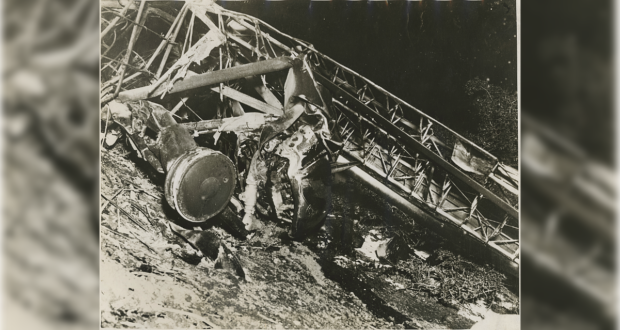
On January 29, 1932, a Century-Pacific Airlines passenger plane vanished in a violent winter storm over the mountains near Lebec, setting off a multi-day search.
The aircraft, a 10-passenger Stinson trimotor piloted by veteran aviator Joseph Victor Sandblom, departed Bakersfield for Glendale at about 3:30 p.m. that Friday afternoon, carrying seven passengers.

A Century-Pacific Stinson trimotor begins service at San Francisco Airport, July 28, 1931. (SCV History)
Battling blinding snow, fog, and gale-force winds over the Ridge Route and Tehachapi Mountains, the plane never arrived.
For nearly a week, more than 500 ground searchers and up to 200 civilian, military, and commercial aircraft combed an estimated 8,000 square miles of treacherous terrain stretching from Lebec and Sandberg to Lockwood Valley, Frazier Mountain, and Caliente. The U.S. Weather Bureau (now the National Weather Service) set up a temporary monitoring station to help in the search.
Unusually violent winter weather repeatedly grounded aircraft and forced search parties back, as snow piled several feet deep and temperatures plunged well below freezing.
Oversight of the aerial search fell to Col. Henry H. “Hap” Arnold, later a five-star general and architect of the modern U.S. Air Force, while ground operations were coordinated from Sandberg by L.A. County Undersheriff Eugene Biscailuz.
The scale of the operation was so unprecedented that the U.S. Weather Bureau decided to establish a permanent monitoring station at Sandberg, which is still active today.
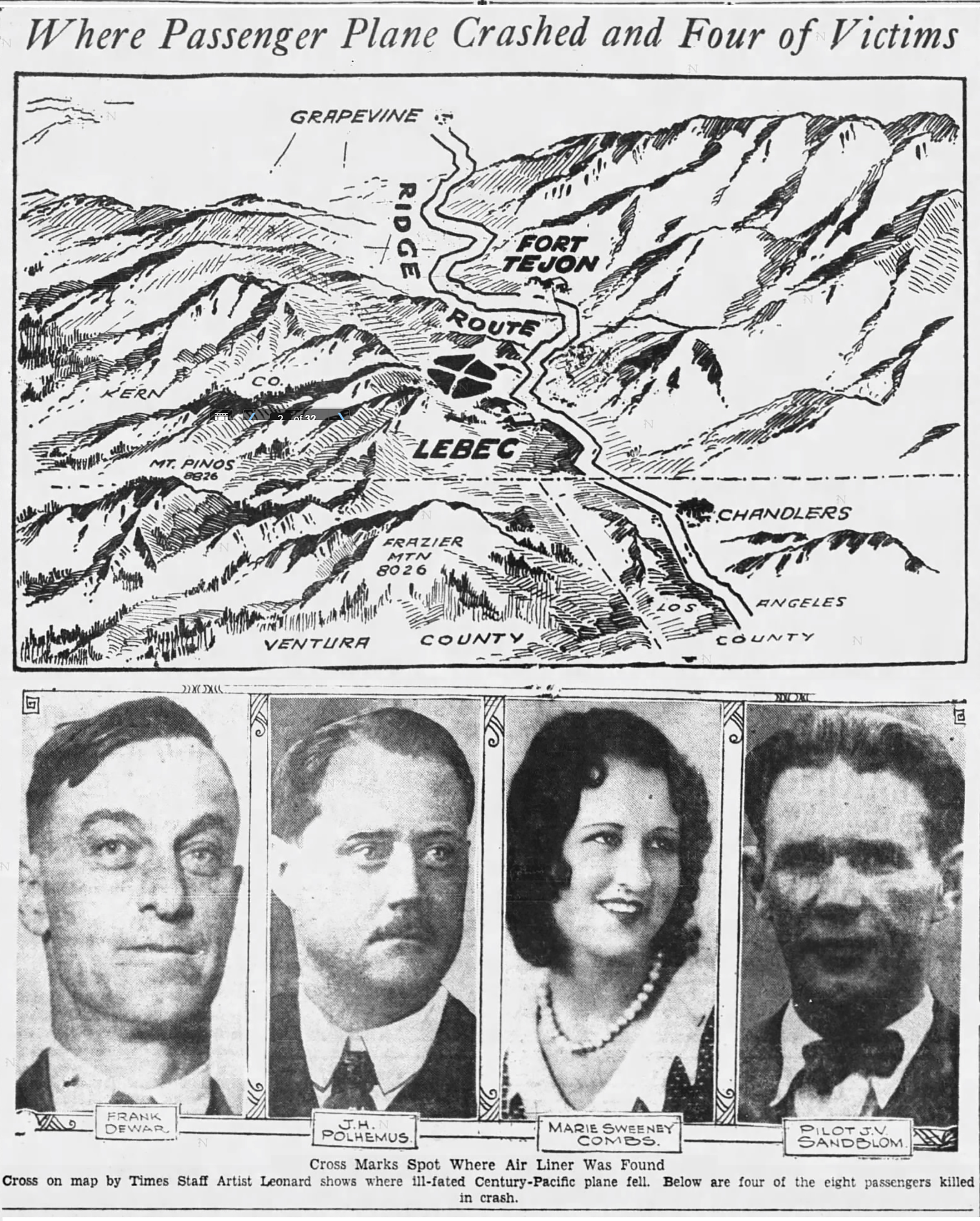
Los Angeles Times, February 5, 1932. (SCV History)
The missing passengers represented a cross-section of Depression-era California:
• Frank Dewar, 48, Los Angeles County’s chief deputy sheriff and World War I veteran
• Marie Sweeney Combs, 18, a Hollywood theater usherette
• Spencer Swan, 71, a Pomona widower rushing to see his son before he sailed for China
• Nita McGrath, 32, a Berkeley businesswoman
• Margaret Fickeisen, 31, returning to San Diego after her sister’s funeral
• John Hart Polhemus, 55, a San Francisco coffee executive
• William Herbert Smith, 40, a retired Army officer traveling for pleasure
On February 5, 1932, seven days after the disappearance of Flightthe charred wreckage was finally discovered in a snow-filled canyon four miles northwest of Lebec by Pablo Paul J. “Pablito” Appodaca, a Tejon Ranch vaquero familiar with the remote terrain.
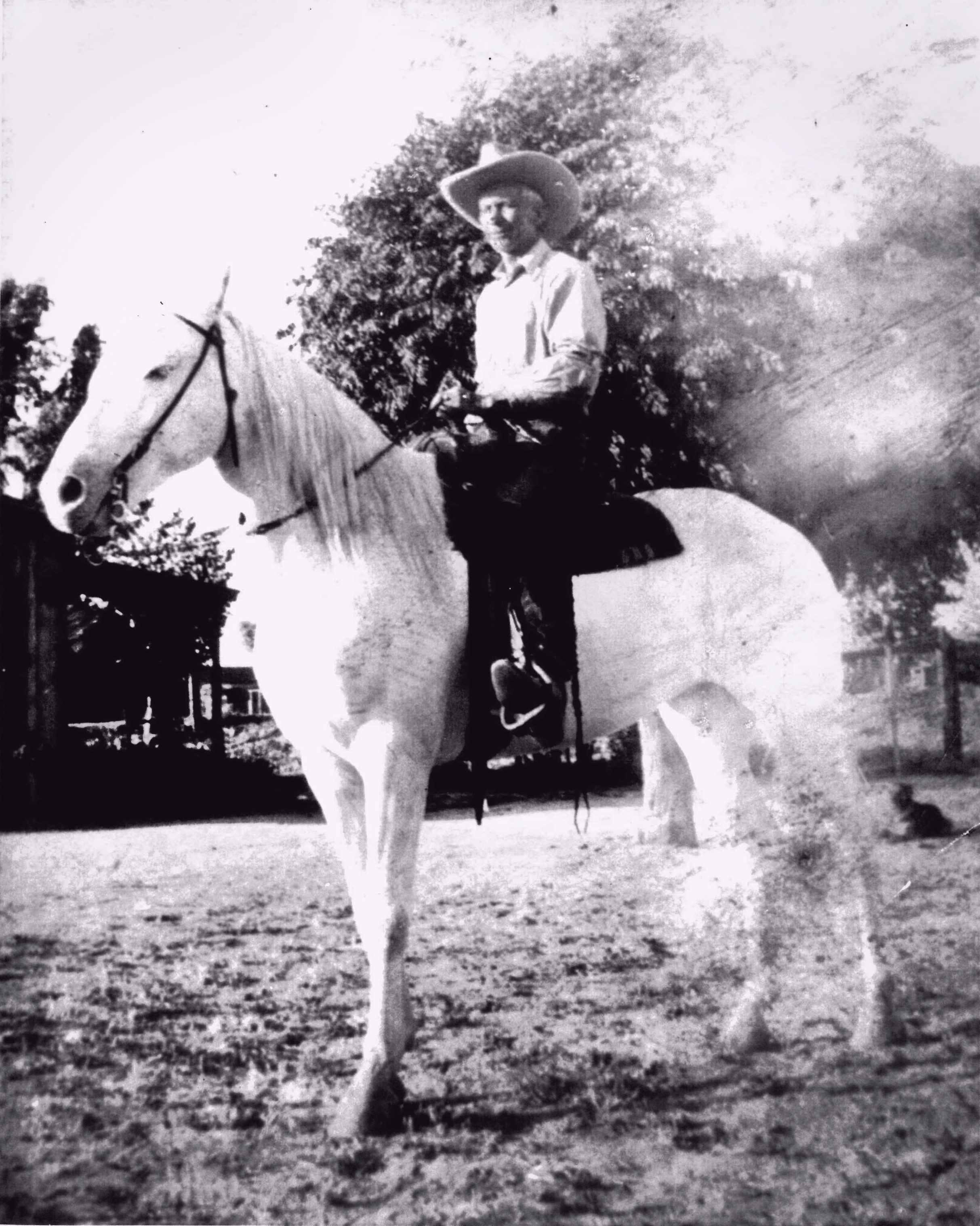
Paul “Pablito” Appodaca: Led searchers to crash site. (SCV History)
Four miles west of Fort Tejon, the twisted wreckage of the plane was discovered on a 3,000-foot hillside. The aircraft had struck the north wall of a canyon just short of clearing a ridgeline, bursting into flames on impact. All eight aboard were killed.
“The occupants had no time to struggle for freedom after the crash, if any lived,” reported the Progress-Bulletin. Later investigation determined that if the plane had been just 75 feet higher in elevation, disaster could have been averted.
The watches of several victims were stopped at 4:15, indicating the time of the crash.
Investigators concluded Sandblom, flying blind in near-zero visibility, had likely attempted to turn back toward Bakersfield when the aircraft clipped the ridge.
Today, the Los Angeles County Sheriff’s Department still acknowledges the date of DeWar’s death.
We Honor and Remember Chief Deputy Sheriff Frank DeWar, End of Watch (EOW) January 29, 1932, Aircraft Accident
On January 29, 1932, Chief Deputy DeWar was en route back to Los Angeles in a commuter aircraft after conducting a follow-up on a kidnapping case in the Bakersfield… pic.twitter.com/m44znuKaYm
— LA County Sheriffs (@LASDHQ) January 29, 2026
To read yesterday’s Today in SCV History, click here.
Sponsored Articles
KHTS FM 98.1 and AM 1220 is Santa Clarita’s only local radio station. KHTS mixes in a combination of news, traffic, sports, and features along with your favorite adult contemporary hits. Santa Clarita news and features are delivered throughout the day over our airwaves, on our website and through a variety of social media platforms. Our KHTS national award-winning daily news briefs are now read daily by 34,000+ residents. A vibrant member of the Santa Clarita community, the KHTS broadcast signal reaches all of the Santa Clarita Valley and parts of the high desert communities located in the Antelope Valley. The station streams its talk shows over the web, reaching a potentially worldwide audience. Follow @KHTSRadio on Facebook, Twitter, and Instagram.