KHTS Radio Santa Clarita Radio – Santa Clarita News

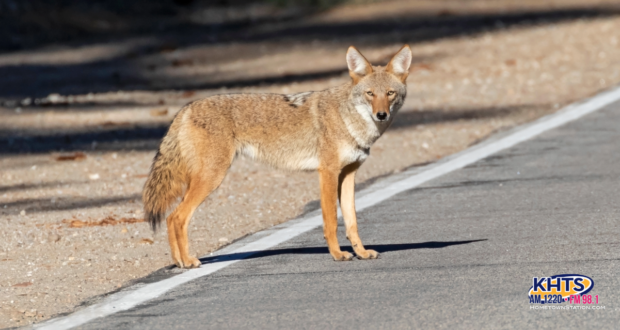
With baby coyotes born this time of year and their parents being more aggressive to protect their young, experts are warning Santa Clarita residents to take extra caution with their pets, especially on hiking trails.
Officials with the Placerita Canyon Nature Center have offered those who enjoy the outdoors tips on how to avoid coming across aggressive coyotes during pup season.
In California, coyotes breed January through March and their pups are born between March and May, according to the U.S. Forest Service.
Coyote pupping season stretches from the time coyotes give birth to when the pups become juveniles and leave their parents, said Niamh Quinn, human-wildlife interactions advisor for the University of California Agriculture and Natural Resources.
The average litter is between five and six pups, according to officials with the Nature Center.
Pups tend to emerge from the den three weeks after they’re born, Quinn said.
“Pups will stay with their parents for about six months, spring to summer, and will be taught how to hunt and behave in their environment by their parents,” Quinn said. “In the fall, which is when food becomes scarce, the parents will consider keeping their juveniles or have them disperse to be on their own.”
Similar to any parent, coyotes become protective around their den and could even become aggressive during this time, according to officials.
Where are coyote dens found?
Dens can be a steep bank, rock crevice, sinkholes or underbrush, according to the Forest Service.
During puppy season, when coyotes become very protective of their young, there is an increased potential for dog-coyote interactions, Quinn said. If a dog unknowingly wanders near a den, it could be attacked.
Dogs and cats are also vulnerable during this time because coyote parents will be looking for more food to bring back to their young, and this could result in domestic pets becoming prey.
Coyotes are part of the Southern California ecosystem, so sightings in the Santa Monica and San Gabriel Mountains and San Fernando and Santa Clarita Valleys are common.
The University of California Cooperative Extension operates a coyote encounter website that allows visitors to input their ZIP Code to see when the last coyote sighting was recorded.
Some precautionary measures hikers and pet owners can take are researching a trail ahead of visiting it for any information on possible closures or warnings of frequent coyote sightings, according to officials.
Hikers who decide to bring along their pet on a trail are encouraged to keep the dog on a leash and be aware of your surroundings.
If the hiker and dog encounter a coyote, leave quickly by walking backward but do not run.
Quinn said coyotes have the instinct to chase after moving targets.
“If a coyote approaches you, ‘haze yell’ and throw things like rocks at the coyote,” she said.
Ed. Note: The above information was provided to KHTS Radio by officials from the Placerita Nature Center.
Sponsored Articles
KHTS FM 98.1 and AM 1220 is Santa Clarita’s only local radio station. KHTS mixes in a combination of news, traffic, sports, and features along with your favorite adult contemporary hits. Santa Clarita news and features are delivered throughout the day over our airwaves, on our website and through a variety of social media platforms. Our KHTS national award-winning daily news briefs are now read daily by 34,000+ residents. A vibrant member of the Santa Clarita community, the KHTS broadcast signal reaches all of the Santa Clarita Valley and parts of the high desert communities located in the Antelope Valley. The station streams its talk shows over the web, reaching a potentially worldwide audience. Follow @KHTSRadio on Facebook, Twitter, and Instagram.