KHTS Radio Santa Clarita Radio – Santa Clarita News


If firefighters are requesting a first-alarm response to a brush fire, what does that mean?
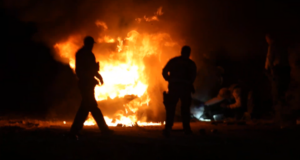
With summer here and brush fires occurring almost daily in Santa Clarita, Fire officials explained the different types of responses seen in and around the valley.
When a caller sees smoke and flames and calls 9-1-1, dispatchers have to determine what type of response to send to fires, said Sky Cornell, an inspector with the Los Angeles County Fire Department.
If a caller says they see a small fire burning, Fire officials will most likely typically don’t send a full brush response, but instead a smaller response to investigate, Cornell said.
“But if we are getting multiple calls from people seeing flames, we will put out a brush response,” Cornell added.
However, due to how much brush and combustible fuels are located around Santa Clarita, the local Fire Department doesn’t take chances by sending a small response to reports of fires, according to Cornell.
“If there is a report of a fire in Santa Clarita or Castaic, we will automatically send a brush response. There are too many homes and brush in that area,” Cornell said.
When dispatchers put out a brush response, it is always a first-alarm response initially, according to officials.
The LACoFD has multiple different types of equipment they use for fighting all types of fires. Some equipment is used for structures, brush and other types, and some equipment is used for other specific types of fire, according to officials.
Most of the equipment used for fighting brush fires or grass fires are included on fire engines, which have three to four firefighters on board. These engines are equipped with hundreds of feet of hose, along with 500 gallons of water and other motorized and hand tools.
The department also uses brush patrols. These are four-wheel drive trucks that consist of a firefighter, 360 gallons of water and tools used for fighting brush fires, according to officials.
Brush patrols are helpful for fighting brush fires because they are able to get up into the hills where fire engines can’t reach, according to officials.
Water tenders are also a tool used for fighting wildfires, and can hold up to 2,500 gallons of water, according to officials.
When engine companies and patrols are fighting a brush fire, they are usually not near fire hydrants, so the water tenders are used to transport water directly to them.
The department also uses camp crews and bulldozers.
The camp crews are a team of 15 firefighters, some of whom are with the LACoFD and some who are trained inmates.
The crews and dozer teams work to cut lines in the brush completely down to the ground so that the fire will essentially burn itself out when it reaches the line.
Lastly, the department uses their fleet of aircraft to fight blazes from above.
The department has two different types of helicopters: the Sikorsky S-70, a Blackhawk and the Bell 412.
The Blackhawk helicopters are capable of holding 1,000 gallons of water and the Bell 412 helicopters hold 360 gallons of water, according to officials.
Around August each year, the department contracts two fixed-winged aircraft called Super Scoopers from Canada.
Each Super Scooper is capable of holding approximately 1,600 gallons of water, according to officials.
In addition to the super scoopers, the Fire Department contracts a Sikorsky S-64 Skycrane called the Helitanker from Oregon, which is capable of holding approximately 2,000 gallons of water.
When a brush fire response is dispatched, it is considered to be a first-alarm response, which includes: seven engines; one brush patrol; four helicopters; four camp crews, one which is brought to the fire lines by one of the helicopters; one dozer; one water tender; one paramedic squad; two battalion chiefs; and the two Super Scoopers, if it is during their contracted time in Los Angeles County, said Brian Stevens, an inspector with the department.
Once fire crews are at the scene of a fire, they determine whether or not to request a second-alarm response depending on how fast the fire is growing, the temperature, the humidity levels and if the Santa Ana winds are blowing, according to officials.
“Each situation depends on the incident commander,” Stevens said. “If we feel there is enough structures threatened, we will request that second-alarm. It’s easier to cancel units than to request them when we really need them.”
When a second-alarm response is requested, the following additional units are added: five more engines; four more camp crews; another dozer; an additional water tender; a heavy equipment superintendent who coordinates the two dozers; a fuel truck for the helicopters; the helitanker;, two more battalion chiefs; an assistant chief; and an emergency support unit (ESU).
ESUs are equipped with medical supplies, IVs, cots and other supplies for crews fighting the fire. It is also a place where firefighters can go to cool off.
If the fire gets even larger and more out of control, a third-alarm response will be requested, which consists of 10 additional engines, two more battalion chiefs and a deputy chief, according to officials.
“There is not anything after a third-alarm,” Stevens said.
If crews need additional resources during a third-alarm response, they will request only the equipment they need, Stevens said.
The response is only one aspect of this story, as there are many terms the Fire Department uses. See Part Two of this guide for further detail on what you may see when firefighters are battling a blaze.
Sponsored Articles
KHTS FM 98.1 and AM 1220 is Santa Clarita’s only local radio station. KHTS mixes in a combination of news, traffic, sports, and features along with your favorite adult contemporary hits. Santa Clarita news and features are delivered throughout the day over our airwaves, on our website and through a variety of social media platforms. Our KHTS national award-winning daily news briefs are now read daily by 34,000+ residents. A vibrant member of the Santa Clarita community, the KHTS broadcast signal reaches all of the Santa Clarita Valley and parts of the high desert communities located in the Antelope Valley. The station streams its talk shows over the web, reaching a potentially worldwide audience. Follow @KHTSRadio on Facebook, Twitter, and Instagram.