KHTS Radio Santa Clarita Radio – Santa Clarita News

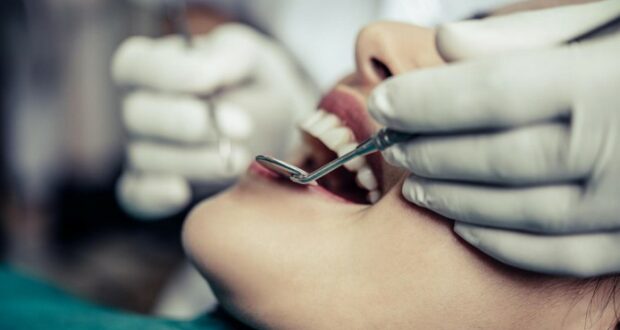
An extraction is usually explained thoroughly. What happens in the months afterwards often is not, and it is the part that determines what your options look like a year later.
The short version: the bone that held the tooth exists because the tooth was there. Once it is gone, that section of jaw begins to reduce, and the reduction is fastest early. Understanding that changes how you think about the gap, whether or not you decide to fill it.
Bone Responds to Load, Not to Time
Jawbone behaves like the rest of the skeleton. It maintains density in response to mechanical stress, and it reallocates resources away from areas no longer under load.
A tooth root transmits chewing forces into the surrounding bone thousands of times a day. Remove the root and that stimulus stops. The body reads the unloaded section as surplus and gradually resorbs it, in both height and width.
This is not decay or infection, and it is not something you did wrong. It is normal remodelling. It just happens to be inconvenient.
The First Year Does the Most
Resorption is not linear, which is the practically important detail.
The largest changes occur in the first several months after extraction, with the rate slowing considerably after the first year and continuing more gradually for the rest of your life. A gap left for six months and a gap left for six years are meaningfully different clinical situations, and the difference is not proportional to the time elapsed.
That is why dentists ask what you plan to do about a gap at the point of extraction rather than waiting for you to raise it. The decision window that preserves the most options is early, even if the treatment itself happens later.
Sequencing Beats Deciding Everything at Once
The practical position most people are in is that they cannot decide immediately, often for financial reasons, and are told that waiting has consequences. Both things are true and they are reconcilable.
The useful step is finding out what your specific situation allows now and what it will allow later, before the window narrows. Practices that handle extractions, grafts, implants and restorative work under one roof, including Luna Dental, can generally map that sequence out across the whole pathway rather than assessing one stage and referring you elsewhere for the next.
Ask specifically: how much bone is there now, how much is likely to remain in a year, and does that change which options are open. That is a concrete question with a concrete answer, and it turns an open-ended worry into a timetable.
How Common This Is
Tooth loss is more prevalent than most people assume, and the causes are well characterized.
The CDC’s overview of oral health identifies cavities and periodontal disease as the leading causes of tooth loss, and notes that 90 percent or more of adults aged 20 and older have had cavities in their permanent teeth, with the figure rising with age. Around 13 percent of adults aged 65 and over have lost all their teeth.
The agency also identifies tobacco use and diabetes as risk factors for gum disease, and separate CDC analysis found that adults aged 50 and over with certain chronic conditions, including diabetes, heart disease, rheumatoid arthritis and others, were significantly more likely to experience severe tooth loss than adults without them.
If you have one of those conditions, that connection is worth raising with both your physician and your dentist, since neither may mention it to you.
This article is general information rather than dental advice. Decisions about your own situation require examination by a qualified clinician.
The Neighbouring Teeth Move Too
Bone is only half the story. The teeth around a gap do not stay where they were.
Adjacent teeth tend to drift toward the space, and the opposing tooth in the other arch, having nothing to meet, can migrate downward or upward over time. Both processes are slow and neither is dramatic enough to notice month to month.
The consequence appears later as a bite that no longer meets evenly, which can produce uneven wear, food traps between teeth that have shifted, and occasionally jaw discomfort. It also means a space that was straightforward to restore in year one may need orthodontic work first in year five.
The Three Replacement Routes
Broadly there are three approaches, and they differ in what they demand from the surrounding structures.
A removable partial denture is the least invasive and least expensive. It sits on the gums and clasps to remaining teeth. It does not transmit load into the bone, so it does not prevent resorption, and it typically needs relining as the ridge changes shape.
A fixed bridge uses the teeth on either side of the gap as supports. It is fixed, it functions well, and the trade-off is that it requires preparing two healthy teeth that would otherwise have been left alone.
An implant replaces the root itself with a post placed into the bone, restored with a crown on top. Because it loads the bone directly, it addresses the stimulus problem rather than working around it. It also requires sufficient bone to place into, which brings us to the timing issue.
Where Bone Grafting Comes In
A graft adds material to a site that no longer has enough bone volume for an implant, providing a scaffold that the body gradually replaces with its own bone.
Grafts are routine and they work, but they add a procedure, a cost, and several months of healing before the implant itself can be placed. Someone acting early may avoid needing one entirely. Someone acting after years of resorption may need a more substantial graft, and in some cases a sinus lift in the upper jaw.
There is also a preventive version, sometimes performed at the time of extraction, which places graft material into the socket to preserve ridge dimensions. Whether it is appropriate depends on the site and on what you intend to do afterwards, which is exactly the conversation worth having before the tooth comes out rather than after.
When Not Replacing Is Reasonable
Not every gap needs filling, and honest clinicians will say so.
A missing rear molar, particularly a wisdom tooth or a second molar with no opposing tooth, often has minimal functional consequence. Chewing capacity is distributed, and losing one contributor at the back of the arch is not the same as losing one mid-arch.
The judgment turns on which tooth, what it was doing, what remains around it, and what the opposing arch looks like. That is a clinical assessment rather than a rule and being told a gap can reasonably be left is a legitimate answer rather than a brush-off.
Questions Worth Asking at the Extraction Appointment
Four, and they take two minutes.
What are my realistic replacement options for this specific tooth? Does anything need to happen at the time of extraction to keep those options open? What is the timeline before the choice narrows? And what does each route cost, sequenced rather than as one total?
Most people leave an extraction thinking about healing and pain relief, which is understandable. The decisions that shape the next decade are the ones nobody is thinking about that day, and they are considerably cheaper to make on time than late.