KHTS Radio Santa Clarita Radio – Santa Clarita News

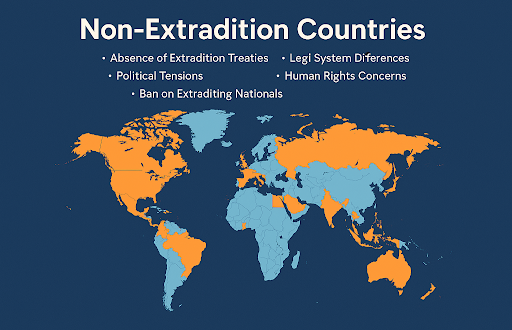
In the realm of international justice, extradition plays a central role. It allows countries to request and transfer individuals across borders for prosecution or sentencing. However, some states either do not engage in extradition or do so under very strict conditions. Understanding why certain nations are considered non extradition countries is essential, especially for individuals facing politically motivated charges or an interpol red notice.
This article outlines the key factors that influence whether a country will comply with an extradition request and explores how legal, political, and human rights issues shape these decisions.
Alt: non-extradition countries
The Legal Basis of Extradition
At the core of any extradition process lies a treaty—an agreement between two or more countries that outlines the conditions and procedures under which individuals can be surrendered. Without such a treaty, there is no legal obligation for extradition.
However, even with treaties in place, the decision to extradite is far from automatic. Many countries incorporate specific legal safeguards or impose conditions related to human rights, judicial fairness, or political context. In practice, extradition is not just a legal act, but a deeply political and diplomatic process.
Why Some Countries Refuse to Extradite
Several factors determine whether a country honors or denies an extradition request. These range from formal legal limitations to political considerations and human rights obligations.
Absence of Extradition Treaties
One of the most straightforward reasons is the lack of an extradition treaty. Countries that have not signed bilateral or multilateral extradition agreements with the requesting state are not obligated to cooperate. For example, some nations may maintain a neutral foreign policy stance and avoid entering into such treaties to limit foreign influence over their internal affairs.
Even in cases where diplomatic relations exist, the absence of a treaty creates a legal vacuum—one in which extradition becomes either impossible or entirely discretionary.
Political Tensions and Diplomatic Strain
Geopolitical relations significantly influence extradition decisions. If two countries are in diplomatic conflict, or if one has publicly condemned the legal system of the other, cooperation becomes unlikely. In such cases, the requested country may view the extradition attempt as politically motivated or retaliatory.
A high-profile example includes tensions between countries over dissident persecution, where extradition requests are perceived as tools of political repression.
Differences in Legal Systems
Variations in criminal law and judicial procedures are another common barrier. What constitutes a crime in one jurisdiction may not be recognized as such in another. Some countries also refuse to extradite if the requesting state cannot guarantee a fair trial, presumption of innocence, or access to legal defense.
Additionally, if the potential punishment—such as life imprisonment without parole or capital punishment—is considered inhumane under the domestic legal framework, extradition may be blocked entirely.
Human Rights Concerns
Many non-extradition countries use human rights protections as a legal basis for refusal. If there is credible risk that the individual will be subjected to torture, inhumane treatment, political prosecution, or denial of fair trial rights, extradition may be deemed a violation of international obligations.
The European Court of Human Rights has repeatedly ruled that states must evaluate the human rights risks before approving extradition. Countries bound by international human rights conventions take this obligation seriously, especially when cases involve vulnerable groups such as refugees, political activists, or journalists.

Domestic Laws Prohibiting Extradition of Nationals
A number of countries, including Germany, France, Brazil, and Russia, have constitutional or statutory provisions that forbid the extradition of their own citizens. Instead of surrendering the individual, these countries may offer to prosecute them domestically under the principle of “aut dedere aut judicare” (either extradite or prosecute).
This legal shield makes extradition impossible in many cases unless the person voluntarily agrees to return or holds dual nationality.
When Non-Extradition Matters Most
Understanding which countries offer protection from extradition is especially important for individuals listed in an interpol red notice. Such notices can trigger arrests worldwide and restrict movement. However, if a person resides in or seeks asylum in a non-extradition country, they may avoid unjust transfer and political persecution.
Scenarios Where Non-Extradition Status is Critical:
- Political dissidents targeted by authoritarian regimes
- Business People accused of economic crimes in corrupt jurisdictions
- Journalists or whistleblowers fleeing retaliatory prosecutions
- Refugees or asylum seekers facing fabricated criminal charges
In each case, having a legal team familiar with international extradition law can help secure safety, freedom, and a fair outcome.
Legal Guidance Is Essential
At Red Notice Lawyers, we understand the urgency and complexity of extradition-related cases. Our team has successfully represented clients facing politically charged prosecutions and helped them navigate the risks of international arrest and transfer. We provide strategic advice on asylum, Red Notice removal, and residence in non-extradition jurisdictions.
From evaluating treaty networks to assessing political risk and human rights exposure, we offer full-spectrum legal defense designed to protect your freedom and future.
If you or someone you know is affected by a Red Notice or extradition request, consult with an experienced lawyer immediately. Knowing your rights—and where they are respected—is the first step toward protection.