KHTS Radio Santa Clarita Radio – Santa Clarita News

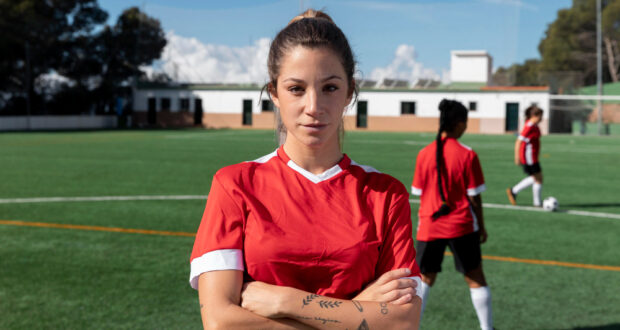
The first Olympic Games was a male-only exhibition of athletic prowess. And no, we’re not talking about the ancient edition, but the first Olympics of the modern era. Since then, women have been ‘allowed’ to participate, but as recently as 1984, not even 25% of athletes were women.
Diversity in sports has changed dramatically since then, for the better. The Tokyo Olympics was nearly gender-equal, with just a shave under 49% of the 11,090 top-level athletes identifying as women. For the United States, women were in the majority for the third-straight Olympics; 329 against 284.
In 2023, we’re finally breaking stereotypes. Diversity and inclusion are on an obvious upswing, but that path has also shown that there is still a lot of work to be done to break down social barriers, and long-standing prejudice, whether it’s in sports or American society.
Inclusion on the Field
If you look at a picture of the starting team of the USWNT on the eve of the World Cup Final in 1999, you’ll notice that pretty much every single player is white. In a game remembered for the epic penalty shootout (and Brandi Chastain’s front-page celebration!), Briana Scurry was the lone representative of the African American community.
Representation has improved steadily in recent years, with the most recent USWNT camp featuring ten players of color. With young players like Trinity Rodman and Naomi Girma, there’s reason to believe there’s a bright, diverse future for the team.
Yet there are still glaring issues with both the professional setup and the grassroots environment in the United States. It’s not only hampering access for players of color but those from marginalized, low-income communities.
‘Rich Kid Sport’
Before 2012, fewer than a dozen black players had ever played for the USWNT. That’s because the national setup has long had a diversity problem, with the pay-to-play model hampering its reach in poorer communities.
In short, soccer is, as US Soccer President Cindy Parlow Cone puts it, a rich, white kids’ sport. For marginalized communities, there’s simply no way to join expensive clubs. Yet there’s hope for the future, with the Soccer for Success program working with over 120,000 girls from underserved communities in the last three years.
It’s not just about creating pathways to the top level of the game, however, but simply introducing this wonderful sport to more communities, particularly those with fewer resources. Once the situation improves at the grassroots level, the USWNT will also naturally feature a more diverse squad.
But that’s not enough. The federation also needs to make sure it caters to talented players of color, ensuring they feel welcome and part of the process. Crystal Dunn’s experience of having to do her own hair at photoshoots, for example, is a simple and stark reminder that we’re still in the baby steps part of the process.
Vocal Social and Political Demonstrations
Women are not only participating in larger numbers than the US men, but they’re also actively taking a leadership role in demonstrating their dissatisfaction. The USWNT, for example, has shown it has a cohesive team setup, influencing not only their results on the pitch but their ability to form together as a single unit.
In previous tournaments, women represented the United States under a patriarchal umbrella. In Tokyo, we saw women breaking out of this, showing their value and voice.
Before their matches, several women’s national soccer teams, including the USWNT, decided to take a knee against racism. Female athletes are also working against biased rules in terms of dress, with the German gymnastics team opting for comfort by wearing full-length unitards.
In general, it was women who made the strongest statements against a systemic lack of inclusion and diversity, fighting for social justice through their position in sports. Gwen Berry’s turning away from the US flag during the playing of the national anthem as a stand for social justice was perhaps one of the bravest, with the athlete surviving an onslaught of online trolling and criticism.
There’s a Long Way to Go
But the sheer amount of pushback on what should be seen as basic human rights does show us a glaring truth: we have a long way to go. Not just in US sports, but as a wider society.
Perhaps Senator Elizabeth Warren (D-Mass.) put it best on Twitter, highlighting how the USWNT brings in more revenue, yet has historically been paid a fraction of what the men earn. But it reflects something more, inequality that’s not limited to the soccer field; women not only deserve equal pay on the soccer field but also in offices and factories around the country.
Let’s hope the developments in the last few years symbolize the first steps in a wider societal shift, bringing inclusion, diversity, equality, and just a simple sense of fairness to the sport and beyond.