KHTS Radio Santa Clarita Radio – Santa Clarita News

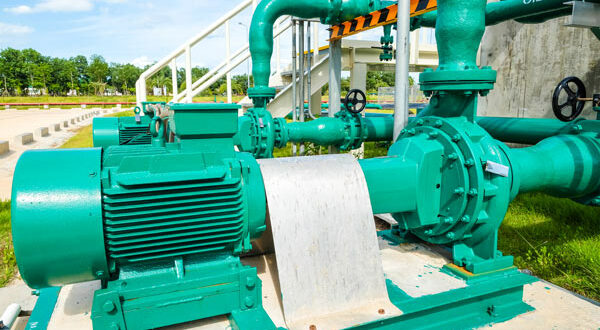
Did you know that a centrifugal pump is one of the most frequently used pumps for industrial applications and residential purposes? This is mostly due to its high efficiency, simplicity, and great design. This pump also boasts a smooth flow rate, a wide range of capacity and head, and ease of use and maintenance.
Provac scroll pumps are definitely worth exploring. If you’re looking to learn more about centrifugal pumps, look no further. In this detailed guide is an outline of everything you need to know about centrifugal pumps. You’ll be glad to know that this isn’t rocket science. With these insights in mind, you’ll know whether to get a centrifugal pump for pumping fluid around your household, and for municipal or industrial applications.
What’s A Centrifugal Pump?
A centrifugal pump is a continuous positive displacement pump that transfers fluids and gases by spinning them with a centrifugal force, pushing them out, and providing an effective solution to high pressure. It can handle most liquids, but it can’t be used for solids or particles larger than 1/8 inch. A centrifugal pump converts rotational kinetic energy to hydrodynamic energy using stream turbine or electric motor.
Centrifugal pumps, such as the Carver pump, are often used for industrial purposes and are especially common in water, oil, and gas industries. They are used to transport and deliver these liquids and gas ingredients from point A to point B. However, they can also be used for residential applications as well. These are for purposes such as pumping water from a lake to your home to help keep your car’s engine temperature cool through the radiator. Furthermore, to optimize reliability and efficiency across all applications, integrating hydraulic filtration products is imperative, ensuring fluid cleanliness, mitigating damage from contaminants, and enhancing the longevity of pump systems.
How Does The Centrifugal Pump Work?
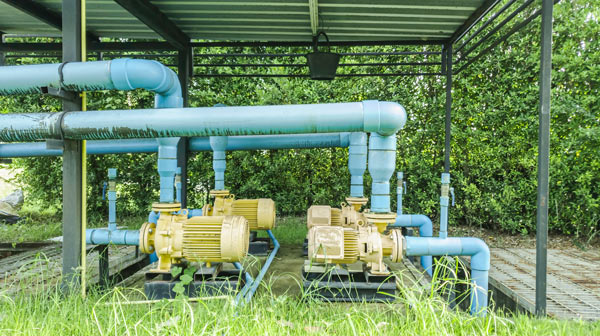
A centrifugal pump works by converting the energy of a driven motor into hydrostatic energy of the fluid being pumped. The centrifugal pump has two primary components: the inlet, through which the fluid enters the pump, and the outlet that directs water out of it. An impeller connects these two parts.
When you turn on a centrifugal pump, the impeller inside a chamber, called a volute or scroll casing, starts to spin rapidly. This action creates pressure in both directions, upward and downward. The impeller rotates at high speed to transfer its momentum to the fluid, thereby creating a low-pressure area. And, while this happens, the fluid moves quickly out of the pump casing, consequently creating a vacuum created by the impeller, which sucks in more fluid in the pump.
This continued suction of fluid into the pump eventually increases the fluid velocity and its kinetic energy. The fluid with high kinetic energy is then forced into the volute out of the impeller. While inside the volute, the liquid constantly continues to flow, increasing the cross-sectional area. It’s here that kinetic energy is transformed into fluid pressure.
Although the design of impeller blades is usually backward-curved, the blade designs can also be forward or radial-curved. The amount of output pressure varies across each of these designs. In addition, these blades can either be closed or open. They can also feature a diffuser that’s built with fixed vanes for guiding the liquid flow towards its exit.
The size of an impeller depends on how fast it revolves, with a bigger one typically rotating a lot faster than a smaller one. As a result, the velocity head is usually a lot higher.

What Are The Different Parts Of A Centrifugal Pump?
There are numerous components in a centrifugal pump, and these are categorized into two broad categories: the mechanical end and the wet end. The latter refers to parts that affect the pump’s hydraulic performance, consisting of the casing and impeller. In contrast, the mechanical end comprises sealing, shaft sleeve, pump shaft, and sealing, and these parts support the impeller inside the casing.
Here’s a look at the specific components in a centrifugal pump and their respective uses:
- Impeller
This, alongside the shaft, makes up the rotating parts of the centrifugal pump, and it’s normally made up of a hub and blades. It’s most commonly made from aluminum or stainless steel, and is attached to the pump’s shaft and rotates at high speed. The hub may or may not have vanes that help reduce turbulence in the fluid flow. The blades are typically curved in shape, and they can be short or long.
The purpose of the impeller is to transfer energy from the motor that drives the pump to the fluid being pumped by accelerating the fluid outwards from the center of rotation. The velocity achieved by the impeller transfers into pressure when the outward movement of the fluid is confined by the pump casing.
- Volute Or Casing
The volute, or casing, is one of the main components that make up a centrifugal pump. It’s what gives the centrifugal pump its characteristic spiral shape. The casing is of a curved funnel shape, with the open end facing the direction of liquid flow. The casing also has an inlet called the suction nozzle and an outlet, which is called a discharge nozzle. This component is stationary in the centrifugal pump, and its purpose is to collect and direct liquid towards the impeller inlet.
- Bearings
Such components limit the shaft’s relative motion and minimizes friction between the stator and the rotating shaft. There are five different types of bearings, and each works under a different set of principles, including magnetic bearing, fluid bearing, plain bearing, jewel bearing, and rolling-element bearing.
- Rotor Or Shaft
It’s on this component that the impeller is mounted, and this mechanical part is responsible for the transmission of torque to the impeller from the motor.
- Shaft Sealing
This comes together with the centrifugal pump, and is meant to help ensure the pumped liquid doesn’t leak.
Takeaway
Over the years, centrifugal pumps have become increasingly popular in several industries and have been used for residential purposes due to their ability to handle solids better. Another appealing thing about such pumps is that they can be used in a broad range of ways. Hopefully, this article has enlightened you by outlining their different components and how they work.